Finding a smartwatch that tracks running metrics and streams music can boost workouts and workouts-through music. This guide highlights five top options designed for runners who want reliable GPS, health insights, and onboard music. Each model combines tracking metrics, long battery life, and a smooth user experience for on-the-go use.
| Product | Key Benefit | Notable Metric |
|---|---|---|
| Garmin Forerunner 165 Music – Black | Vivid AMOLED, GPS pace/distance, recovery insights | Battery up to 19 hours GPS |
| Garmin Forerunner 165 Music – Whitestone | Bright display and race-ready plans | Garmin Coach compatibility |
| Garmin Forerunner 55 | Budget-friendly GPS running with daily workouts | Up to 2 weeks battery |
| Garmin Forerunner 265 | AMOLED, robust metrics, recovery outlook | Morning HRV and training readiness |
| Garmin Forerunner 255 Music | On-watch music, long battery, multi-song storage | Up to 30 hours GPS |
Garmin Forerunner 165 Music Black

The Forerunner 165 Music in black offers built-in GPS for pace and distance, plus wrist-based heart rate monitoring. Its AMOLED touchscreen combines vibrant visuals with traditional button controls for convenient navigation. The watch weighs lightly in a 43 mm form factor and supports up to 11 days of battery life in smartwatch mode or 19 hours in GPS mode. It also provides personalized daily workouts and adaptive training plans via Garmin Coach and race-focused guidance to help athletes reach event goals.
Garmin Forerunner 165 Music Whitestone

The Whitestone variant shares the same core features: a user-friendly running smartwatch with GPS pace and distance, a brilliant AMOLED display, and a 43 mm lightweight body. Expect up to 11 days in smartwatch mode and about 19 hours GPS mode. It supports daily suggested workouts that adapt to performance and recovery, assisted by Garmin Coach plans to tailor training for upcoming events.
Garmin Forerunner 55

The Forerunner 55 focuses on essential running analytics with a clear GPS view of your distance and pace. It monitors wrist-based heart rate and offers up to two weeks of battery life in smartwatch mode and around 20 hours in GPS mode. A notable feature is PacePro, which provides GPS-guided pacing guidance for specific courses or distances, aiding race-day strategy for runners.
Garmin Forerunner 265 Running Smartwatch

The Forerunner 265 adds a brighter AMOLED display and a 46 mm case for a larger viewing area. It promises up to 13 days of smartwatch battery life and up to 20 hours in GPS mode. It also includes a morning routine overview—covering sleep, recovery, training outlook, HRV status, and weather—providing a holistic view of fitness and readiness for workouts.
Garmin Forerunner 255 Music
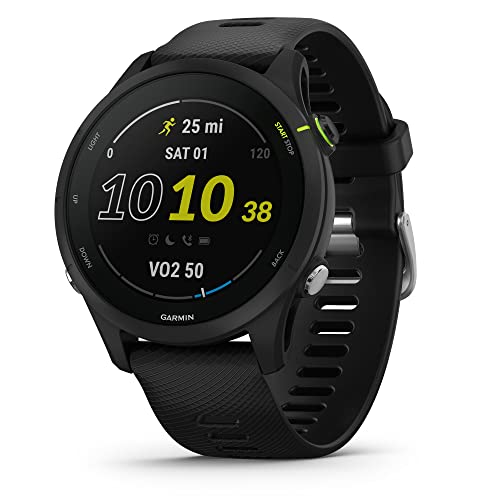
The Forerunner 255 Music balances a slim profile with substantial music features, including capacity for up to 500 songs and compatibility with Spotify, Amazon Music, or Deezer. It offers a long battery life: up to 14 days in smartwatch mode and up to 30 hours in GPS mode. It sleeps tracking and health data combine with training insights for a broad health-and-performance picture on the run.
Buying Guide: Key Purchase Considerations For Running And Music Watches
- Music storage and streaming: If you want on-device music, verify capacity and streaming service compatibility. Some models support offline playlists from popular services, reducing reliance on a phone during workouts.
- GPS accuracy and sensors: Look for multi-band GPS, optical heart rate, and HRV data if you want precise pace tracking and recovery insights. Multi-band GPS generally improves route accuracy in challenging environments.
- Display quality and usability: AMOLED screens provide vivid visuals, but ensure screen visibility in direct sunlight and consider button vs. touchscreen navigation for running with sweaty hands.
- Battery life: Evaluate smartwatch mode and GPS mode endurance. If you run long distances or triathlons, longer GPS battery life is important; music playback can also impact life.
- Training guidance: Some watches offer Garmin Coach and adaptive training plans. These can be valuable for structured programs, especially for race preparation.
- Comfort and size: Check case size (e.g., 43 mm vs 46 mm) and weight. A comfortable band and a low-profile bezel improve wearability during long sessions.
- Durability and water resistance: For outdoor runners, IP ratings and ruggedness support exposure to sweat, rain, and splashes. Ensure appropriate water resistance if you swim.
- Smart features: Notifications, calls, and music controls can add convenience, but ensure the device’s interface remains intuitive during workouts.
- App ecosystem and compatibility: Consider how well the watch integrates with your smartphone, music services, and fitness apps you already use.
These devices provide a spectrum of options from compact, budget-friendly runners to feature-rich watches with robust training analytics and extensive music capabilities. When choosing, align features with your training goals, music preferences, and comfort on your wrist to ensure the best fit for running and music on the go.