For coyotes and other nocturnal targets, a reliable thermal scanner can give hunters an edge by revealing heat signatures through darkness and light cover. This guide highlights five leading thermal monoculars and 2-in-1 units designed for hunting, wildlife observation, and field reliability. Each entry includes core specs, what makes it stand out, and practical notes for on-the-ground use.
Summary of Selected Products
| Product | Brand | Key Benefit | Resolution | Notes |
|---|---|---|---|---|
| RIX Pocket K3 | RIX | Ultra-portable with easy tripod use | 384×288 | 50 Hz, pocket-friendly |
| AGM Taipan TM19-384 | AGM Global Vision | High sensitivity with robust optics | 384×288 | 50 Hz, LCOS display |
| Teslong 2 in 1 Thermal Monocular | Teslong | Dual-use for hunting and inspections | 256×192 | 3.5″ screen, 12 μm detector |
| AGM Taipan TM15-256 | AGM Global Vision | Compact with good zoom | 256×192 | 12 μm, LCOS display |
| AGM Fuzion TM35-384 | AGM Global Vision | Bi-spectrum imaging for detailed view | 384×288 | 35 mm lens, 12 μm detector |
RIX Pocket K3 Portable Thermal Monocular

The RIX Pocket K3 is designed for field portability with a compact form factor that still delivers solid thermal performance. A 384×288 thermal sensor paired with a 50 Hz detector supports mid-to-long-range viewing, reducing motion blur when tracking fast-moving targets. Its 800×600 OLED display provides clear image quality, aiding rapid target confirmation in dusk or night conditions. The device weighs lightly and fits into a pocket, yet can be mounted on a tripod via a standard ¼ inch interface for steadier observation.
Key features emphasize a practical balance between size and capability: a wide horizontal field of view at 17.5°, usable 853-yard visibility under favorable conditions, and convenient Wi-Fi connectivity for quick sharing or remote viewing. This makes it a practical choice for hunters who move through terrain and want a dependable, low-profile device for coyotes and other nocturnal game.
AGM Taipan TM19-384 Thermal Monocular

The Taipan TM19-384 from AGM Global Vision offers a high-sensitivity detector at 384×288 with a 12 μm pixel pitch, delivering clearer thermal imagery in challenging weather. The device integrates adaptive AGC, digital image enhancement features like DDE and 3D DNR, and a high-resolution 1280×960 LCOS display for sharp portraits and landscapes. Its robustness makes it well-suited to hunting in variable environments where coyotes may hide in brush or under cover.
This model emphasizes image quality and processing, enabling hunters to distinguish warm bodies from background clutter. For coyote hunting, the TM19-384 provides dependable target acquisition in low-light windows, with the kind of detail that supports safe target confirmation and ethical shooting decisions.
Teslong 2 in 1 Thermal Monocular

Teslong’s 2-in-1 Thermal Monocular is marketed as a versatile tool for both hunting and building inspections, combining a 256×192 thermal sensor with an 11 mm focal lens. The device supports a 3.5-inch LCD screen that flips for comfortable viewing and offers clear detection at varying distances. Features emphasize multi-utility, including a macro focus capability that enhances near and far object recognition, and a focus on long-range detection up to around 1000 yards in ideal conditions.
For coyotes, the Teslong unit can be a practical standby or supplemental device thanks to its panoramic display and focus flexibility. The dual-use design means it’s equally useful for field surveillance, trail monitoring, or check-ins on remote locations where environmental conditions can shift quickly between night and predawn hours.
AGM Taipan TM15-256 Thermal Monocular
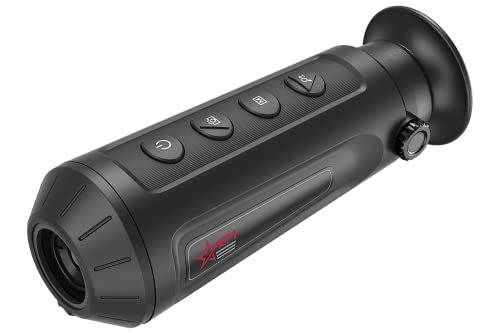
The Taipan TM15-256 focuses on compact performance with a 256×192 thermal sensor and a 12 μm pixel pitch. This model balances portability with a practical zoom range and a LCOS display that provides detailed nighttime imagery for field reconnaissance. Its design is suited to hikers and hunters who want a dependable thermal monocular that’s easy to carry on long treks while still delivering credible thermal detail when coyotes emerge from cover.
With a thoughtful combination of sensitivity, power efficiency, and a compact build, the TM15-256 supports reliable day-to-night scouting. The unit’s overall ergonomics and display clarity help ensure clear identification of movement at safe distances, contributing to ethical hunting decisions and safer field practices.
AGM Fuzion TM35-384 Thermal Imaging Monocular

The Fuzion TM35-384 brings bi-spectrum imaging by combining thermal and optical detection around a 35 mm focal length. With a 384×288 detector and a 12 μm pixel pitch, it excels in environments prone to smoke, fog, rain, or snow. The model also advertises an impressive observation distance supported by the optics, enhancing long-range recognition when coyotes are active near the field edges or open terrain.
This unit’s strength lies in its integrated environmental awareness and its ability to provide a more complete scene interpretation by fusing thermal and optical cues. For hunters targeting wary or distant coyotes, the Fuzion TM35-384 offers a robust option with extended reach and reliable image clarity in adverse conditions.
Buying Guide: Key Purchase Considerations
- Resolution and pixel pitch: Higher resolutions (e.g., 384×288) with smaller pixel pitch (12 μm) typically yield crisper details at distance — important for identifying coyotes in brush or grass.
- Refresh rate: 50 Hz models reduce motion lag, especially when tracking fleeing targets and moving across uneven terrain. A higher rate often improves perceived image fluidity.
- Display quality: Look for LCOS or similar high-contrast displays and a comfortable field of view. A larger, high-contrast screen helps reduce eye strain during long surveillance sessions.
- Portability vs. durability: Pocket-sized units offer ease of carry, while rugged housings and tripod compatibility support steady observation in rugged field conditions.
- Connectivity and storage: Wi-Fi or app connectivity can facilitate quick sharing or remote monitoring, and built-in storage (even modest) helps in field note-taking and evidence gathering.
- lenses and focal length: Narrower focal lengths (longer zoom) help with distant targets; wider lenses enable faster scanning in brushy fields. Consider your typical engagement distances.
- Power and battery life: Field hunts require devices that can run through long nights. Check battery capacity, standby power usage, and charging options.
- Weather resistance: Coyotes are hunted in varied weather. Look for devices with weather sealing and operating range suitable for rain, fog, and cold conditions.
- Ethical use and safety: Ensure a clear line of sight and safe target identification before shooting. Thermal guidance can reduce misidentification in dim light.
These products emphasize a mix of portability, image clarity, and field practicality. When selecting a unit for coyote hunting, consider your typical terrain, expected engagement distances, and whether you value standalone use or integrated app connectivity for quick field reporting. The right balance of resolution, speed, and ergonomics will help in reliably locating and confirming targets while maintaining safe and responsible hunting practices.