For new players, choosing the right tennis ball can make practice smoother and more enjoyable. Low-compression and youth-targeted balls help beginners develop control, pace, and consistency without the frustration of fast bounces. Below is a curated guide to five beginner-friendly tennis balls that are popular in American schools, clubs, and home courts. Each option focuses on slower speed, visible tracking, and durable construction to support early skill-building.
| Product | Best For | Key Benefit |
|---|---|---|
| WILSON Sporting Goods Youth Tennis Balls – US Open Orange | Ages 9-10; stage 2 orange starter play | 50% slower bounce for controlled rallies |
| Penn QST 60 Tennis Balls | Beginners on smaller courts | Lower compression for slower speed and easy tracking |
| GAMMA Quick Kids 36 Training Tennis Balls | Younger players; 10 & Under tournaments | 75% slower speed; high visibility two-tone felt |
| Penn QST 36 Tennis Balls | Beginner ball on 36’ courts | 75% reduced speed; strong spin tracking |
| WILSON Starter Foam Balls | Driveways and early-stage practice | Oversized foam with 25% less bounce |
WILSON Youth Orange Tennis Balls – 3 Pack

The WILSON WRT1373 set is designed for younger players within the 9-10 age group, aligning with stage 2 orange ball guidelines. The orange color stands out for easier tracking, and the balls are engineered with a lower compression to slow bounce by about half compared with standard balls. This combination supports controlled drills, longer rallies, and improved hand-eye coordination as beginners work on fundamentals. Durable construction helps withstand frequent hitting during practice sessions. Coaches and parents often favor these balls for lesson consistency and reduced player fatigue during longer drills.
Penn QST 60 Orange Balls for Beginners

Penn QST 60 balls are built to support junior players with lower compression and slower speeds, making it easier to master basic strokes on a 60-foot court. The two-tone orange-yellow felt enhances visibility during rallies, which helps beginners gauge spin and bounce more reliably. Penn leverages a century of testing to maintain consistency, so coaches can design progressive drills that build confidence, from short warm-ups to longer rally practice. The polybag packaging offers convenient storage and transport for lessons or family practice sessions.
Magicorange 20-Pack Stage Tennis Balls

Magicorange offers 20-pack stage balls with 50% low compression, designed to stay consistent through regular practice. The natural rubber core paired with durable felt reduces shock and preserves feel across court surfaces, which is beneficial for developing players honing control. The reusable mesh bag aids transport and organization, while the included multi-color options increase visibility for quick spot checks during drills. This set is commonly used for group lessons and club clinics where multiple balls are needed for quick transitions and continuous practice.
GAMMA Quick Kids 36 Training Balls
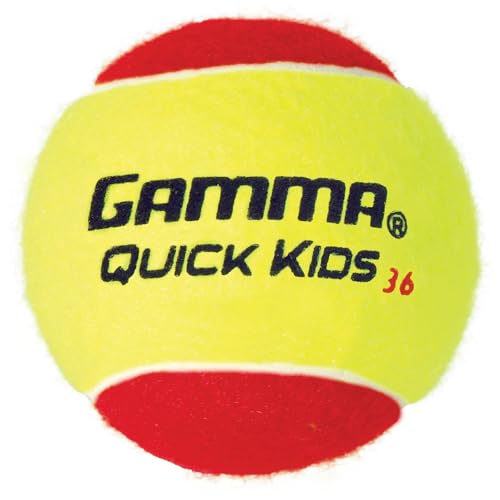
GAMMA Quick Kids 36 training balls are specially engineered for younger players and beginners. The outer core is crafted to be 75% slower in speed, enabling longer rallies and more controlled practice. The two-tone bright yellow and red felt increases visibility, helping players track spin and trajectory as they learn topspin and slice mechanics. These balls are approved for use in 10 & Under tournaments by USTA and ITF, which makes them a reliable option for formal practice and competition simulations. Their design also assists instructors in demonstrating proper form without the intimidation of high-speed balls.
Penn QST 36 Red Tennis Balls for Beginners

Penn QST 36 balls are designed to support beginners practicing on shorter courts, with lower compression that yields a slower, more controllable bounce. The red-yellow two-tone felt helps learners visually track spin and height, which is beneficial when developing consistency on groundstrokes and serves. Penn’s long-standing track record in ball testing translates to durable performance under repeated use, making these balls a solid option for lessons, backyards, or school gym sessions where reliability is key for sustained practice blocks.
PENN Control Plus Tennis Balls for Beginners

Penn Control Plus balls offer a slightly lower compression compared with standard balls, yielding a controlled bounce that suits players who are still building timing and shot selection. The 25% reduced speed helps prolong rallies, making drills more productive for beginners who want to develop consistency before increasing pace. The two-tone green dot design improves visibility during fast exchanges and spin practice. These balls strike a balance between feel and durability, making them a practical option for clinics and home practice alike.
WILSON Starter Foam Balls

Wilson Starter Foam balls are oversized and designed for 36-foot courts, driveways, and playground setups. They deliver about 25% less bounce than regular balls, making them ideal for very early skill development, hand-eye coordination, and simple rallying without overwhelming young players. Foam balls are forgiving on furniture and walls, reducing the chance of unintended damage during practice at home or in school gymnasiums. This option is particularly suitable for absolute beginners who are just learning to strike the ball and keep rallies going.
Buying Guide
- Age and court size alignment: Choose orange or red/yellow two-tone balls for younger players and smaller courts to ensure visible trajectory and appropriate bounce.
- Compression and speed: Lower compression translates to slower speed and reduced bounce, aiding control and longer rallies for beginners.
- Ball traceability: High visibility colors or two-tone designs help learners track ball rotation and contact better during drills.
- Durability vs. cost: Durable felt and construction matter for frequent practice; consider multi-pack options for clubs and schools to minimize downtime.
- Format and storage: Mesh bags or polybags support easy transport and organization, especially for lesson plans and group sessions.
- Regulatory compatibility: If practicing for under-10 tournaments, look for balls approved by USTA/ITF for age-appropriate play.