Starting a running routine often means finding a watch that tracks pace, distance, heart rate, and recovery without complicating things. The following selections emphasize simple interfaces, reliable GPS, and clear data that helps new runners build consistent habits. These picks cover popular Garmin models, a versatile fitness tracker, and devices with long battery life so you can train longer between charges. Whether you want daily workouts, coaching features, or a bright display for easy reading, there’s a beginner-friendly option here to suit different needs.
Summary of chosen products: a quick glance at the core traits helps you compare at a glance. The table highlights each watch’s main strengths (GPS accuracy, battery life, daily suggested workouts, and display type) to help you decide which model fits your training pace and goals.
| Product | Key Strengths | Display Type | Battery Life (Smartwatch / GPS) |
|---|---|---|---|
| Garmin Forerunner 55 – Black | Easy-to-use, daily suggested workouts | Monochrome / color | Up to 2 weeks / 20 hours |
| Garmin Forerunner 165 – Black | AMOLED display, recovery insights | AMOLED | Up to 11 days / 19 hours |
| Garmin Forerunner 55 – Aqua | Same beginner-friendly features with color options | Monochrome / color | Up to 2 weeks / 20 hours |
| Garmin Forerunner 55 – White | Intuitive controls, PacePro pacing | Monochrome / color | Up to 2 weeks / 20 hours |
| Amazfit Active 2 | Long battery life, many sport modes | AMOLED | Up to 10 days / GPS |
Garmin Forerunner 55 – Black

The Garmin Forerunner 55 is designed for beginner runners who want straightforward GPS pacing and heart-rate monitoring without overwhelming data. It tracks distance, pace, and route using built-in GPS, with a wrist-based heart-rate sensor (not a medical device). Battery life supports extended wear in smartwatch mode, and up to 20 hours when GPS is active. The PacePro feature offers GPS-based pacing guidance for a chosen course or distance, supporting race-day strategy in a simple, accessible way.
Garmin Forerunner 55 – Aqua
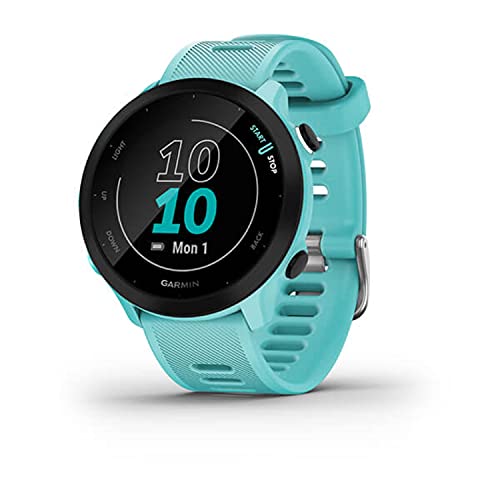
The Aqua variant of the Forerunner 55 keeps the same beginner-friendly features tailored to new runners. It monitors heart rate at the wrist, uses GPS to measure distance and speed, and provides daily suggested workouts to support steady progression. Its battery life allows two weeks in smartwatch mode, with around 20 hours of GPS tracking. PacePro gives GPS-based pace guidance for a selected course or distance, helping runners plan effective workouts without complexity.
Garmin Forerunner 55 – White

The Forerunner 55 White edition emphasizes clarity and accessibility for beginners. It retains the core features preferred by new runners: straightforward GPS tracking, wrist-based heart-rate monitoring, and daily suggested workouts that adapt to your progress. PacePro offers pacing guidance for training and race plans, while the battery life remains robust—up to two weeks in smartwatch mode and roughly 20 hours in GPS mode—minimizing frequent recharging during training blocks.
Amazfit Active 2 – 44mm

The Amazfit Active 2 offers a broader fitness feature set for runners who want more tracking options without complexity. It features a 1.32″ AMOLED display for easy readability in daylight and a multi-sport mode list that covers essential activities. The watch emphasizes long battery life—up to 10 days with typical use—and robust sleep monitoring. It provides GPS maps and a comfortable design suitable for everyday wear and training sessions alike, making it a versatile option for beginners expanding into more varied workouts.
Buying Guide
When choosing a running watch as a beginner, consider the following factors to ensure you get a device that supports habit formation, safety, and gradual progression:
- Ease of use: Look for a clean interface with large menus and straightforward controls. A watch that presents daily workouts and simple pace data helps maintain motivation.
- GPS performance: Reliable pace and distance tracking are essential for building a consistent training plan. Confirm whether the device uses GPS and whether it has a backup method if GPS drops.
- Wrist-based heart rate: Handy for monitoring effort without a chest strap. Note that it is not a medical device; use as a general guide for training zones and recovery.
- Battery life: For beginners who log long runs or multiple workouts weekly, a longer smartwatch mode can reduce charging interruptions. Check both smartwatch and GPS runtimes.
- Coaching features: Daily suggested workouts, Garmin Coach, or adaptive training plans can help structure progression. Ensure the plans align with your goals and available time.
- Display readability: A bright, high-contrast display improves readability in daylight and during quick glances, which is important during runs.
- Durability and water resistance: A watch with water resistance and a rugged build withstands outdoor running and variable weather.
- Form factor and comfort: Choose a size that fits your wrist well and feels comfortable during longer sessions. Weight and strap quality affect wearability over time.
- Compatibility and ecosystem: If you already use a smartphone or health apps, confirm data syncing and app support to keep your training logs centralized.
- Price-to-value: For beginners, prioritize features that support steady progression and motivation over premium extras you may not use yet.
Comparison snapshot for beginners: Garmin Forerunner 55 variants focus on simplicity and coaching, with strong battery life and PacePro pacing. The Garmin Forerunner 165 adds a brighter AMOLED display and recovery insights for more detailed training feedback. The Amazfit Active 2 expands sport mode options and long battery life with a modern display, offering a more feature-rich package at a potentially different price point. Your final choice should balance display clarity, coaching options, and battery endurance with personal comfort and everyday wearability.