Ready to upgrade your climbing setup? This guide highlights five dependable rock climbing ropes, focusing on durability, handling, and safety features. Each product below features practical specs and notable design elements to help climbers compare options for indoor gyms, outdoor routes, and rescue scenarios. Use the buying guide at the end to refine your choice based on length, diameter, material, and compliance standards.
| Product | Brand | Length | Key Feature |
|---|---|---|---|
| X XBEN Outdoor Climbing Rope 10M | X XBEN | 10M (32ft) | Low outer skin sliding rate; 13 whole-core construction |
| AOLEBA 10.5 mm Static Rope 10M | AOLEBA | 10M (32ft) | CE EN 892 certified; high abrasion resistance |
| X XBEN Outdoor Climbing Rope 20M | X XBEN | 20M (64ft) | Low ductility static rope; lightweight and sturdy |
| GINEE 10mm Rock Climbing Rope 35FT | GINEE | 35FT | Multi-length options; polyester core and low stretch |
| NTR Orange/Black/Blue Climbing Rope 10M | NTR | 10M (32ft) | Heavy-duty carabiner-ready rope end; reinforced core |
X XBEN Outdoor Climbing Rope 10M (32ft) – 32 ft Escape Rope

The X XBEN 10M rope uses a 13-core construction to deliver solid strength with moderate softness. It emphasizes a low outer skin sliding rate (less than 0.05%), which helps maintain braking function and smooth handling during climbs. The design aims to reduce pilling and distribute loads more evenly, contributing to predictable performance in both rescue and sport climbing scenarios. This rope is marketed as lightweight yet sturdy, ideal for emergency escapes or shorter routes where compact gear matters.
Key considerations include the rope’s ease of transport after rolling, controlled diameter, and how the static characteristics translate into practical braking and friction behavior on belay devices. While compact in length, it emphasizes reliability under static loading and predictable handling for confident clip-in transitions on shorter ascents.
AOLEBA 10.5 mm Static Rope – 10M to 70M Options

AOLEBA’s 10.5 mm static rope offers notable abrasion resistance and a balance of softness with strong binding force. It is CE certified to EN 892:2012+A2:2021 standards, indicating compliance with widely recognized safety criteria for static climbing ropes. Available lengths range from 10M to 70M, giving users flexibility for indoor training, tree work, or rescue practice. The rope’s bright color improves visibility in variable weather, aiding quick identification on job sites or in gyms.
Performance highlights include moderate stiffness that helps with rope control and knot reliability, plus a combination of two end types (sewn ends or pre-attached hooks). The product page emphasizes that the rope end is sealed to resist fraying and improve longevity. Consider this rope for heavy-use environments where CE certification and long service life are priorities.
X XBEN Outdoor Climbing Rope 20M (64ft) – Extended Length
This 20-meter version of the X XBEN rope expands the same core design to longer routes, maintaining a low outer skin sliding rate and the same emphasis on smooth operation. The rope’s 13 whole-core construction contributes to reliable strength, while the outer skin twisted construction enhances wear-resistance. The rope remains lightweight enough for transport to multi-pitch climbs while delivering sufficient headroom for longer ascents and belayed descents.
Climbers should note the static properties and how the extended length interacts with rope management on longer routes. The design focuses on reducing security risks associated with excessive rope extension and aims to keep handling predictable for both climbers and belayers during prolonged sessions.
GINEE 10mm Rock Climbing Rope – 35FT Static
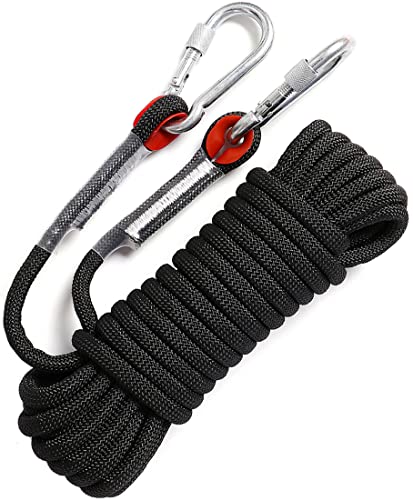
The GINEE rope is a static 10mm line available in shorter lengths like 35FT, with multiple other length options. It uses a high-strength polyester core in a multi-core multilayer structure, designed to deliver dependable static performance suited for arborist work, rescue training, and controlled rappelling. It features two protection rings and buttonholes for added durability, helping to prevent fraying at the ends and extend rope life during repetitive use.
Considerations for selecting this rope include its material construction and the balance between stiffness and ease of handling in short rope applications. For climbers seeking predictable braking and straightforward knot-work in a compact form, the GINEE rope provides a practical option with robust build quality for reliability in static applications.
NTR Orange/Black/Blue Climbing Rope – 10M

NTR’s 10M static rope emphasizes safety through a robust construction featuring reinforced polyester skin with a 13-strand inner core. The rope is paired with a heavy-duty carabiner design and steel hooks, designed to handle up to 25KN tension. The composition aims to deliver stable performance in outdoor rappelling and rescue scenarios, with a focus on secure locking and durable wear resistance. The rope’s color variation aids visibility, an asset in low-light conditions or cluttered climbing environments.
When evaluating this rope, consider the balance between its short length and the need for effective braking and durable rope ends. The included gear (carabiner-ready end and twist-lock features) can influence setup time and overall safety during quick ascents or rescue drills.
Buying Guide: Key Purchase Considerations
- Rope Type: Static vs dynamic. Static ropes minimize elongation and are common for rescue, belay anchors, and rappelling; dynamic ropes are better for lead climbing due to stretch.
- Diameter and Weight: Thicker ropes offer durability but add weight; lighter options improve handling and transport for longer approaches.
- Length: Match rope length to typical routes and use case. Shorter ropes are common for gym work and rescue practice; longer lengths suit multi-pitch climbs and complex belays.
- Material and Construction: Polyester cores provide strength and abrasion resistance. Look for multi-core or braided constructions for durability and even load distribution.
- End Finishes: Sealed vs sewn ends affect longevity and fraying resistance. Some ropes offer two-end options or hooks for convenience.
- Certification and Standards: CE EN 892 certification is a common benchmark for static ropes; verify compliance with local safety standards relevant to your region.
- Visibility: Bright colors help locate rope in low-light or cluttered environments, reducing risk during operations.
- Durability and Abrasion Resistance: Outer sheath wear and low pilling contribute to longer service life in rugged environments.
- End-Use Context: Indoor gym climbing, outdoor sport routes, arborist work, or rescue training each benefit from specific rope attributes such as stiffness, knot reliability, and end protection.