Recumbent bikes offer a safe, low-impact way to support knee rehab. Their reclined seating and supportive backs reduce knee load while delivering cardiovascular benefits. The following five models are selected for comfort, quiet operation, and rehab-friendly features such as wide seats, adjustable backs, and sturdy frames. Each product is evaluated on ease of use, resistance variety, weight capacity, and accessibility for users recovering from knee injuries.
| Product | Brand | Notable Benefit | Weight Capacity |
|---|---|---|---|
| JEEKEE Recumbent Bike | JEEKEE | Low-cost, quiet, smooth ride for knee-friendly workouts | Up to 300 lbs |
| Cursor Fitness Recumbent Bike | CURSOR FITNESS | 16-level magnetic resistance; adjustable seat and back | Not specified |
| Marcy ME-709 Recumbent Bike | MARCY | Step-through design for easy mounting; 8 resistance levels | Not specified |
| Birdfeel Recumbent Bike | Birdfeel | Ergonomic comfort; 16 levels; high weight capacity | Up to 400 lbs |
| HNLIY Electric Pedal Exerciser | HNLIY | Arm and leg rehab with dual motors and adjustable timer | Not specified |
JEEKEE Recumbent Bike: Smooth, Quiet Ride

The JEEKEE recumbent bike emphasizes a low-impact cardio experience suited for knee rehab. Its 53.5-inch frame accommodates a wide range of heights, with a seating system that supports riders from about 4’9″ to 6’5″ and an inseam range designed for comfortable mounting. The user can load up to 300 lbs, making it accessible for many users seeking a stable, forgiving workout. Motion is powered by strong neodymium magnets and a double belt system, delivering a smooth, steady resistance with reduced mechanical noise. This combination helps minimize knee stress while promoting endurance.
Ease of use is a core feature. The bike offers a straightforward, low-resistance start and a broad range of resistances that allow gradual progression—critical for knee rehabilitation. The seat is adjustable, and the overall frame design prioritizes a natural pedaling position to reduce knee strain. For rehab settings, the quiet operation minimizes disruption in shared spaces, enabling consistent daily sessions. Users can combine this bike with a guided rehab plan to steadily increase range of motion and leg strength without jarring impact.
In practice, the JEEKEE model supports safe, comfortable cardio for those with knee concerns or post-injury recovery. The combination of a comfortable seating arrangement, quiet biomechanics, and durable construction helps create a reliable home workout option that aligns with rehab goals. It is especially suitable for users who require a steady routine with minimal noise and predictable performance.
Cursor Fitness Recumbent Bike: 16-Level Magnetic Resistance

The CURSOR FITNESS recumbent bike is designed for home cardio with a strong emphasis on adjustability and smooth operation. It features an 11 lb flywheel paired with a magnetic control system offering 16 resistance levels. This setup enables users to start with gentle resistance and gradually increase as knee rehab progresses, providing scalable intensity without impacting joints. The belt-driven mechanism keeps noise to a minimum, supporting use in shared spaces or early morning sessions without disruption.
Comfort and fit are central to rehab-friendly design. The extra-wide, padded, breathable saddle enhances comfort during longer sessions, while the seat and backrest adjustments ensure proper alignment for a wide range of body types. The bike accommodates riders from approximately 4’8″ to 6’5″ with a two-way seat that offers a seven- or eight-position range and a backrest with vertical adjustment, along with widened pedals featuring multiple positional options. These features collectively support safe, customized workouts that protect knee joints during progression.
From a rehab perspective, the CURSOR FITNESS model balances resistance variety with ergonomic improvements. Its quiet belt-driven system, solid frame, and thoughtful adjustability create a dependable platform for knee rehabilitation, enabling users to perform controlled workouts that build endurance and flexibility over time.
Marcy ME-709 Recumbent Bike: Easy Mount & 8 Levels
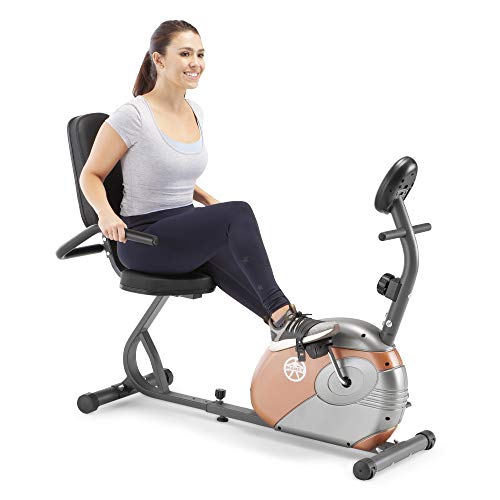
The Marcy ME-709 focuses on accessibility and straightforward training. Its step-through frame uses heavy-duty 14-gauge steel tubing with a powder-coated finish to ensure durability and ease of mounting, which is particularly beneficial for individuals with knee or back concerns. The bicycle provides eight magnetic resistance levels, enabling a graduated workout that grows with rehabilitation progress. The tension knobs let users simulate different terrains, helping tailor workouts to comfort levels and endurance goals.
An easy-to-read LCD display tracks time, speed, distance, and calories burned in large numerals, supporting clear progress monitoring during rehab sessions. The combination of a simple, reliable resistance system with an accessible mounting process makes the ME-709 a practical option for users seeking a basic yet effective knee-friendly cardio solution at home.
For knee rehabilitation programs, the step-through design reduces strain when mounting and dismounting, while the adjustable resistance supports a gradual increase in intensity. The overall build emphasizes stability and reliability, helping users sustain consistent routines essential for recovery.
Birdfeel Recumbent Bike: Comfort & 16 Levels
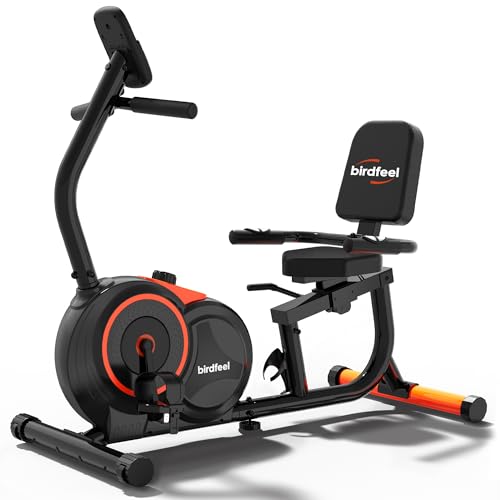
The Birdfeel recumbent bike is built for comfort and durability, with an ergonomic design that pairs a plush padded seat and supportive backrest. Its adjustable lever-based seat system accommodates various heights, enabling multi-user households to share a single machine without compromising knee alignment or comfort. The bike uses a precision-balanced 10 lb flywheel and a magnetic resistance system to deliver a quiet, smooth ride—ideal for rehabilitation, early morning sessions, or living spaces where noise must be minimized.
Stability is a clear focus, with a robust steel frame and a maximum load of 400 lbs. The bike ships 85% pre-assembled, with front transport wheels that simplify repositioning within a home gym. For knee rehab, these features translate into a convenient, low-stress cardio option that can be adjusted through multiple resistance levels to support gradual strength and mobility gains, all while maintaining a quiet environment.
Overall, Birdfeel emphasizes ease of use, comfort, and resilience. The combination of a forgiving seat, solid back support, and strong build makes it a capable choice for rehab-focused workouts at home, particularly for users who value stability and quiet operation during recovery sessions.
HNLIY Electric Pedal Exerciser for Rehab

The HNLIY pedal exerciser is designed for both active and passive rehab strategies, supporting rehabilitation protocols that target knees, legs, arms, and hands. Its dual-motor design enables independent or simultaneous training of upper and lower limbs, with a quiet 60W motor suitable for gentle, controlled movements. The timer function ranges from 1 to 20 minutes and a programmable P1-P6 option allows varying levels of exertion, enabling personalized rehab sessions that adapt to individual recovery stages.
As a lightweight home device, this pedal exerciser emphasizes portability and ease of use. It is well-suited for individuals who require targeted knee or joint mobility work without a full-body recumbent cardio setup. The adjustable pace and multi-mode operation support a broad spectrum of rehab activities, making it a flexible addition to a knee-rehabilitation plan.
Buying Guide
When choosing a recumbent bike for knee rehab, several factors determine suitability beyond basic features. The following considerations help compare models and identify the best fit for individual recovery goals.
- Comfort and ergonomics: Look for a wide, cushioned seat, a supportive backrest, and adjustable seat depth or fore-aft position to minimize knee strain. A step-through frame reduces bending and helps safer mounting and dismounting.
- Resistance range and smoothness: For rehab, a bike with magnetic resistance and a range from very light to moderate intensity enables careful progression. A belt-driven system generally offers quieter, smoother operation, which supports consistent workouts without rushing recovery.
- Weight capacity and stability: A higher weight rating indicates a sturdier frame and greater confidence during push or pull movements. Stability is essential to protect knees during challenging sets.
- Adjustability: The ability to accommodate different heights and leg lengths reduces awkward pedaling and knee bending angles. Backrest height, seat depth, and pedal position matter for safe alignment.
- Quiet operation: Quiet bikes minimize disruption in shared living spaces and make early-morning rehab sessions feasible for those recovering from knee injuries.
- Ease of assembly and maintenance: Models with simplified assembly and durable parts reduce setup time and maintenance concerns during rehab.
- Display and monitoring: A clear LCD or LED console that shows time, speed, distance, and calories helps track rehab progress. Optional pulse sensors or Bluetooth connectivity can support broader fitness tracking.
- Safety features: Transport wheels, locking frames, and stable bases help prevent accidental movement during workouts, a key consideration for knee-friendly routines.
- Warranty and support: Strong warranties and readily available customer support reduce the risk of downtime during rehabilitation processes.
In comparing the five models above, consider your preferred seating position, the necessário level of resistance, and how easily you can perform seated and leg-focused motions without aggravating the knee. For home rehab programs, a combination of low-impact cardio and mobility-ready settings typically yields the best outcomes while minimizing discomfort and recovery time.
If you’re starting from a lower fitness baseline, begin with the gentlest resistance and shorter sessions, then gradually increase duration and intensity as tolerated. Always coordinate with a healthcare professional to tailor a plan that aligns with your knee rehabilitation goals.