Choosing a recreational dive computer means balancing reliability, intuitive design, and safety. The five models below represent strong options for American divers seeking easy operation and dependable decompression data: Peregrine by Shearwater, Garmin Descent G1, Mares Genius, Mares Sirius, and Mares Puck Pro EZ. Each model brings distinct strengths, from simple interfaces to advanced gas management and color displays. The summary table highlights core capabilities for quick comparisons.
| Product | Brand | Key Strength |
|---|---|---|
| Peregrine Dive Computer | Shearwater | Simple two-button navigation; up to 30h battery |
| Descent G1 Dive Computer | Garmin | Rugged watch-style; GPS support; multi-mode |
| Genius Scuba Dive Computer | Mares | ZH-L16C algorithm; Nitrox/Trimix |
| Sirius Watch-Style Dive Computer | Mares | Color display; multi-gas support |
| Puck Pro EZ Wrist Dive Computer | Mares | Clear display; Nitrox up to 50% |
Peregrine Dive Computer

Designed for divers who value reliability and simplicity, the Peregrine uses a two-button interface and a state-aware menu to streamline navigation. Its rugged construction includes stainless steel buttons and a compact profile that fits under wetsuits. Battery life reaches about 30 hours on a medium brightness setting, supporting multi-dive trips or travel sessions without frequent recharging.
For recreational divers, Peregrine delivers essential dive information with easy-to-read depth and time cues, alarms, and log memory. The emphasis is on dependable decompression data and predictable operation, making it a practical choice for new divers and experienced riders who want a straightforward, low-maintenance computer in a compact package.
Descent G1 Dive Computer

The Garmin Descent G1 blends rugged, watch-style wearability with reliable dive data. Its monochrome display and sapphire lens support legibility in bright light and deep water, while a long-lasting battery offers up to 25 hours in dive mode. Built-in GPS/Satellite support helps record surface routes, and three modes accommodate recreational, technical, and free-diving profiles for diverse needs.
Beyond diving, the G1 doubles as a smartwatch, logging fitness metrics and daily activities. Gas management includes configurable alarms and log storage, enabling divers to tailor settings to personal risk tolerance. For users who want a single device for everyday wear and reliable dive readings, the Descent G1 provides a cohesive, durable solution.
Genius Scuba Dive Computer
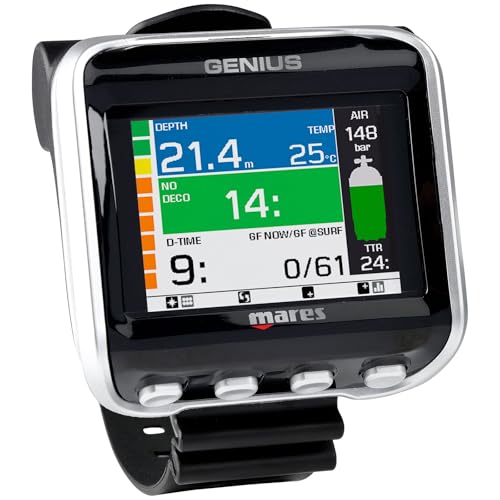
The Mares Genius uses the ZH-L16C decompression algorithm with multiple gradient factors and 16 fabrics, giving divers control over ascent rates and safety margins in varied conditions. It supports Nitrox and Trimix, with the ability to manage up to five gas mixes for more complex dives. This versatility makes the Genius suitable for both recreational and technical divers seeking advanced planning tools.
With a 2.7-inch color LCD display and a clear, multi-zone layout, the Genius presents depth, dive time, no-deco limits, and gas settings in an intuitive format. The wrist-worn design prioritizes comfort, while the interface remains accessible for quick checks during ascent or safety stops.
Sirius Watch-Style Dive Computer

The Mares Sirius is a watch-style dive computer designed for recreational to extended-range divers. It emphasizes quick, at-a-glance readings with a color-coded tank display and a high-resolution MIP screen for legibility in challenging conditions. The interface offers multiple faces and color options to suit personal preferences and readability in various lighting.
Powered by the ZH-L16C algorithm with gradient factors and multi-gas capabilities, Sirius supports up to five gas mixes, including nitrox and trimix. Mapping predictive models and alarms helps divers plan safe ascents, while the compact design makes it practical for everyday wear as a daily watch and a capable dive computer.
Puck Pro EZ Wrist Dive Computer

The Mares Puck Pro EZ emphasizes clear visibility with a high-contrast screen that remains legible underwater. Its layout focuses on depth, time, temperature, and no-deco limits, enabling quick access to essential data while diving. This simplicity is advantageous for divers who value straightforward monitoring without extra complexity.
Gas management centers on single-gas Nitrox compatibility from 21% to 50%. The Puck Pro EZ uses the Buhlmann ZH-L16C algorithm with dual gradient factors to calculate decompression trajectories safely. The compact form and steady performance make it a practical entry point for recreational divers seeking reliable, cost-effective decompression tracking.
Buying Guide
When selecting a recreational dive computer, prioritize display readability, ease of use, and dependable decompression data. The models above cover a range from rugged watches to compact consoles, so choose based on how you dive and where you travel. Important considerations include display type (monochrome vs color), interface simplicity, and battery life for multi-dive trips. Gas management capabilities, such as Nitrox or Trimix support, dramatically influence versatility for future dives.
- Display readability in bright light and low visibility.
- Gas mixing support and gauge integration for planning and safety.
- Algorithm quality and decompression modeling (ZH-L16C or equivalent).
- Battery life, charging method, and real-world endurance.
- Form factor: watch-style vs console; comfort and daily wearability.
- Air integration options and transmitter compatibility.
- Durability, water resistance, and reliability in cold water or salt spray.
- Connectivity with log apps and data export for post-dive review.
For entry-level divers, ease of use, clear alarms, and predictable data are essential. For experienced divers, advanced gas planning, multiple gas mixes, and extended-mode dives may drive the choice. If you travel frequently, a compact, durable design with long battery life and easy data export can simplify trips.