For many fitness enthusiasts, pull-ups are a benchmark exercise that builds upper-body strength, grip, and core stability. However, achieving a proper, full-range pull-up can take time. Pull up assist bands offer scalable support, allowing beginners to work through the movement safely while gradually increasing resistance as strength improves. The right set pairs with various pull-up bars and door mounts, enabling progressive overload without costly gym visits. This guide highlights five top options, explaining how they differ in weight ranges, comfort features, and overall versatility to help you choose the best fit for your goals.
| Product | Brand | Resistance/Adjustability | Key Feature |
|---|---|---|---|
| Innstar Pull Up Assistance Bands | INNSTAR | 165 lbs adjustable | Sturdy buckles, protective nylon covers, triple-band progression |
| HPYGN Pull Up Assistance Bands | HPYGN | 3 elastic bands; adjustable length | Fabric feet/knee rest; upgraded multifunction accessories |
| Ayombo Pull Up Assistance Bands | Ayombo | Four bands; 75–300 lb total resistance | High-grade natural rubber; versatile, full-body training |
| HOXWC Pull Up Assistance Bands | HOXWC | Three bands; 75–225 lbs | Double footrest; comprehensive upper-body focus |
| Lifeline Pull Up Revolution | Lifeline | Progressive resistance across motion | Unique motion-assist design for consistent reps |
Below we explore each option in depth, focusing on how the design supports progressive strength gains, the typical user experience, and how they compare for different workout setups—whether you’re at a home gym, apartment space, or a dedicated training room.
Innstar Pull Up Assistance Bands

Innstar’s three-band set emphasizes safety and durability. The bands come with steel buckles designed to stay securely in place, and a protective cloth covering helps preserve the latex and protect skin from pinches or abrasion during intense reps. The kit targets a broad range of upper-body muscles—arms, shoulders, back, chest, and core—making it a solid choice for full upper-body development in a home gym. The ability to combine all three bands or start with just one allows athletes to tailor assistance to their current strength and technique progressions, supporting a steady climb toward unassisted pull-ups.
The build quality centers on long-term use. The protective layer and sturdy connectors reduce wear over time, which is important when bands experience frequent stretching. The design supports total-body workouts by enabling controlled, scalable resistance as you execute each phase of the pull-up—start with higher assistance and gradually reduce as strength improves. For routines that mix grip variations or mixed angular loads, Innstar’s set provides reliable baseline support that stays consistent across sessions.
HPYGN Pull Up Assistance Bands
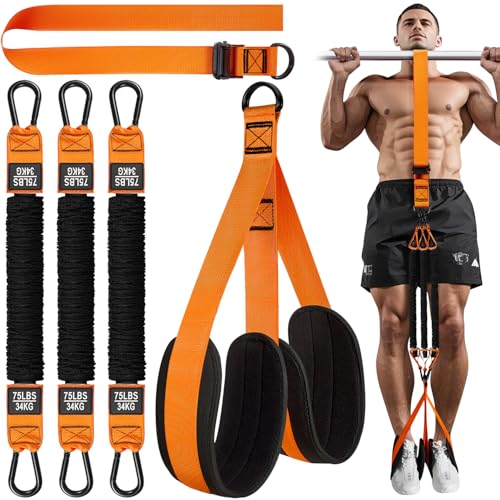
HPYGN offers a 3-band system with adjustable length tailored to a user’s height, making it adaptable for different pull-up bar setups. The kit emphasizes gradual progression, starting with a single assist band and increasing resistance as strength builds so athletes can work toward a full, unassisted pull-up. An added advantage is the new upgraded multifunction accessories, including adjustable straps, three elastic bands, and two sponge pad slings, which improve comfort and stability during longer sessions. The fabric-based feet/knee rest components further minimize slippage and pressure on joints during transitions.
This setup is especially suited for beginners who want a clear path to mastering the full movement. The adjustable length means you can connect the bands across different bar heights without reconfiguring your entire station. The combination of durable elastic bands and supportive accessories helps protect the wrists and elbows from strain as you experiment with tempo and control. HPYGN thus stands out for accessibility and incremental load management in a compact, door-friendly package.
Ayombo Pull Up Assistance Bands
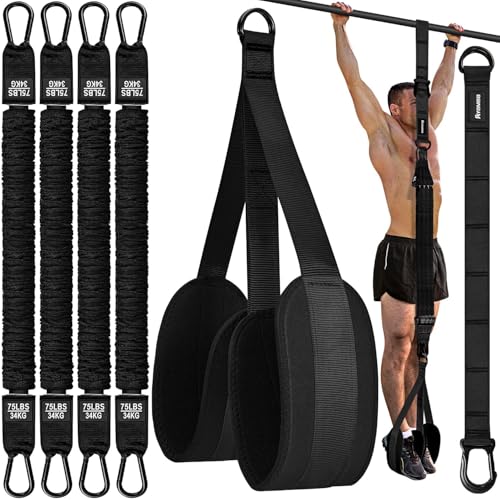
Ayombo provides four 75-pound bands offering a wide progressive range from 75 to 300 pounds total resistance. The bands are described as made from 100% high-grade natural rubber, delivering strong tension and a long service life. This set is designed for both fitness enthusiasts and beginners, allowing users to start with fewer bands and increase load as they gain upper-body strength. The generous 81-inch length provides flexibility for various mounting heights and body sizes, enabling safe practice for full-range movement and even some leg engagement to support certain training formats.
The Ayombo kit emphasizes versatility—use individually or combined to tailor resistance to your goals. The natural rubber material helps preserve tension across reps, and the broad resistance span supports hypertrophy work or endurance-focused sessions. Because the bands are designed to be portable and durable, they’re well suited for home gyms, travel training, or gym bag use. This flexibility makes Ayombo a practical option for people who want a straightforward path from assisted to independent pull-ups while maintaining comfort and safety.
HOXWC Pull Up Assistance Bands

HOXWC combines three 75-pound resistance bands to deliver a 75–225 pound assistant range. A notable feature is the comfortable double footrest design, which improves stability and reduces strain on the ankles and feet during early reps. The bands are intended for users at different levels, from beginners needing ample assistance to more advanced athletes who can tighten their setup for heavier loads. The system supports the full upper-body emphasis of pull-up progressions—arms, back, chest, and core—while providing a stable platform to practice form and tempo.
HOXWC’s design encourages safe, controlled motion, which is essential for reducing the risk of injury during weighted or assisted pull-ups. The triple-band configuration makes it easier to isolate and adjust assistance, aiding in consistent progression week over week. If you value a stable, low-friction setup with thoughtful comfort features, this option offers a reliable balance of support and portability for home gyms and apartment-dwelling trainees alike.
Lifeline Pull Up Revolution System

The Lifeline system emphasizes a unique design that allows pull up assistance throughout the entire motion, enabling more repetitions with proper form as you build strength. Its progressive approach helps athletes perform more sets and higher-quality reps before muscle failure, which can accelerate gains in arms, shoulders, and chest. This option suits users who want a consistent stimulus across the entire range of motion rather than a fixed, preset level of assistance. It’s particularly useful for progress tracking and technique refinement in a controlled, lower-impact setup.
As a distinct alternative to traditional band-based setups, Lifeline offers a specialized mechanism that maintains resistance consistently, even as you move through the eccentric and concentric phases. The design can be beneficial for rehabilitation drills, endurance-focused sessions, or athletes aiming to improve ceiling height in their chins and pull ups. While it may require a slightly different mounting approach, its capability to sustain assistance through all movement phases makes it a compelling choice for steady-state progressions and long-term training plans.
Buying Guide
Key Purchase Considerations
Resistance range and progression: Choose bands that offer a clear path from assisted to unassisted pull-ups. Look for sets that provide multiple bands or adjustable lengths so you can tighten or loosen the load as you improve. A gradual progression framework reduces the risk of form breakdown and injury while maintaining motivation.
Number of bands and configuration: More bands can mean finer control over assistance, but they should also be easy to manage during workouts. Consider how you’ll attach the bands to your bar or door mount, and whether the setup allows quick swaps between loads for supersets or tempo work.
Attachment method and height adjustability: Ensure compatibility with your existing pull-up bar or door frame mount. Adjustable lengths or strap systems help accommodate different ceiling heights, user heights, and grip variations, which expands the versatility of your home gym.
Comfort features: Padding, footrests, or knee rests reduce fatigue and improve stability, especially during longer sets. Materials matter; natural latex tends to be durable but may fatigue with heavy use, so look for reinforced stitching and protective covers that minimize skin irritation.
Durability and materials: Look for high-quality latex or synthetic alternatives with robust stitching and reinforced buckles. A longer lifespan reduces total cost of ownership and ensures consistent performance across workouts.
Portability and storage: If you travel or train in multiple spaces, choose a compact, lightweight kit with a carrying option. A travel pouch or compact packaging makes it easier to carry fields of resistance for workouts on the go.
Comparisons By Use Case
- Beginners seeking a clear progression path: Innstar, HPYGN, and Ayombo offer straightforward increments and excellent stability features.
- Gestures toward rehabilitation or technique-focused work: Lifeline’s motion-consistent design provides an alternative method to standard bands for controlled reps.
- Space-conscious homes: HOXWC and HPYGN provide compact, efficient setups with comfortable support accessories for long sessions.
Quick Tips For Safe, Effective Use
- Inspect bands before each session for signs of wear or cracking. Replace any compromised bands immediately.
- Warm up shoulders and backs with mobility exercises before starting assisted pull-ups to protect joints.
- Attach bands at a consistent height to ensure even loading on both sides of the body.
- Begin with higher assistance and gradually reduce as form and strength improve.
- Combine pull-ups with complementary exercises—rows, scapular pulls, and core work—to balance muscle development.