Rucking blends cardio with strength work by carrying weight on the back. The right pack keeps load secure, distributes weight evenly, and minimizes fatigue across miles. This guide highlights five top backpacks designed specifically for rucking, featuring dedicated ruck-plate pockets, reinforced construction, and cushioned shoulder straps. Each option is evaluated for durability, fit, load management, and adaptability to different plate sizes. Whether you’re chasing new personal records, building endurance, or training for tactical tasks, these packs help you carry weight efficiently and safely.
| Product | Brand | Load Capacity (Lbs) | Notable Feature |
|---|---|---|---|
| GORUCK Rucker 4.0 20L Black | GORUCK | Up to 75 | Ruck Plate pocket, extra padded straps |
| Polyfit Rucking Backpack 2.0 | Polyfit | Up to 40 | Side-loading design for plates |
| Ruckercise Ridge 21L | Ruckercise | Not specified | Two dedicated ruck weight pockets, 1000 Denier Cordura |
| GORUCK Rucker 4.0 20L Black With Embroidery | GORUCK | Up to 75 | Embroidery variant, same core design |
| WOLF TACTICAL Weighted Backpack | WOLF TACTICAL | Up to 40 | MOLLE webbing, weight-plate compatibility |
GORUCK Rucker 4.0 20L Black

The Rucker 4.0 20L is purpose-built for rucking, featuring an elevated pocket designed for Ruck Plates, reinforced construction, and extra-padded straps. This design aims to keep weights high on the back to boost posture and stability during movement. The inclusion of multiple handles enhances versatility for pulling, lifting, or quick transitions between exercises, making it a solid core tool for varied training routines.
Strap design is a standout feature, with wide, reinforced, and cushioned sections that reduce neck and shoulder pressure when carrying heavier loads. The interior and exterior foams are laminated to form a durable, comfortable interface against the body, helping to minimize hot spots during long sessions. The Rucker’s build prioritizes durability for frequent rucking sessions and harsh training environments.
Rucking with this pack emphasizes high weight stability. The elevated plate pockets keep plates from shifting and bouncing, enabling you to progressively load up—up to 75 pounds when needed—while maintaining form. Beginners are advised to start lighter, around 20–25 pounds, to acquaint the core and shoulders with the pack’s geometry before scaling up.
Polyfit Rucking Backpack 2.0

The Polyfit Rucking Backpack 2.0 is engineered for weight plates with a patent-pending side-loading system. This layout makes it easy to insert or remove plates while keeping them locked in place with an internal buckle system. The result is minimal plate shift even during brisk runs or dynamic lifts, enabling longer training bouts with heavier loads.
Designed to place weight close to the upper back, the pack supports better posture and reduces excessive forward lean. It accommodates up to 40 pounds and accepts plates up to 10 by 12 inches, making it compatible with a wide range of standard ruck weights. This design promotes efficient movement and stable balance during both walking and running workouts.
In practice, the side-loading approach reduces the time spent adjusting weights mid-session. Athletes often appreciate how quickly they can add or remove resistance during interval work, tempo runs, or progression sets. The pack’s frame and materials emphasize durability for regular, high-intensity training cycles.
Ruckercise Ridge 21L
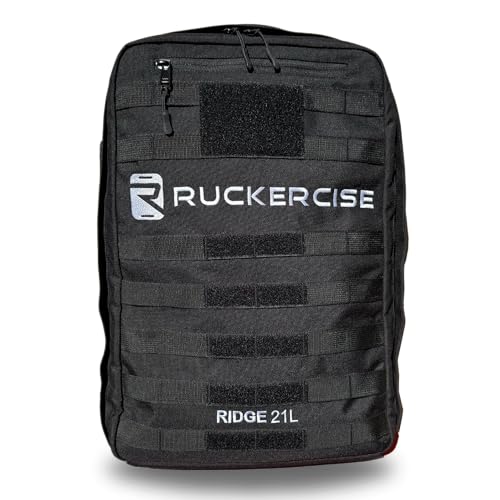
The Ridge 21L is engineered specifically for ruck training, featuring reinforced, extra-padded shoulders and multiple grab handles that add versatility for switching between exercises. Its two dedicated pockets for ruck weights, including a larger pocket for longer plates and a secondary pocket for shorter weights, support flexible load configurations during workouts.
Constructed with 1000 Denier CORDURA Nylon, this pack emphasizes durability and abrasion resistance in demanding training environments. The Ridge is designed to endure long sessions, with a layout that minimizes movement of the plates and distributes weight to reduce fatigue. Training plans that mix walking, running, and strength routines can benefit from its balanced design.
For users exploring consistent, heavier plate work, the Ridge offers a robust option with clear weight-pocket zoning and rugged construction. Beginners should start with lighter plates to learn form and fit before progressing to more demanding weights.
GORUCK Rucker 4.0 20L Black With Embroidery

This embroidery variant retains the core advantages of the standard Rucker 4.0—20L capacity, dedicated Ruck Plate pocket, reinforced build, and cushioned straps—while offering a distinctive aesthetic. The elevated plate pocket design continues to prevent plate movement, supporting stable weight distribution during long rucks or rapid transitions.
The wide, double-layer foam padding maintains shoulder comfort as loads increase. The exterior is built to resist abrasion and impact, ensuring durability across training sessions and varying environments. Like the standard model, it supports substantial loads, enabling progressive strength work without sacrificing fit or comfort.
As with other Rucker variants, new users should begin with modest weights to establish proper form and to gauge how the pack sits during walking, jogging, or running segments. The embroidery option simply adds a visual customization while preserving performance characteristics.
WOLF TACTICAL Weighted Backpack

The WOLF TACTICAL Weighted Backpack emphasizes high-performance rucking with an ergonomic design that supports comfortable extended wear. It accommodates standard 10×12 inch weight plates and offers a maximum load near 40 pounds, providing a versatile option for progressive training. The pack features laser-cut MOLLE webbing, increasing customization possibilities with pouches and gear for added carrying capacity.
The design prioritizes tailored weight distribution to reduce forward lean and promote balance during both walking and running. A low-profile pocket beneath the front flap can securely store small items like phones and wallets, helping keep essentials accessible without disrupting the main load. This makes it a practical choice for mixed workouts and outdoor drills.
Users should evaluate their plate sizes to ensure compatibility and consider additional pouches for organization. The bag’s weight-bearing capacity and modular capabilities make it suitable for diverse training regimens and gear setups.
Buying Guide
Weight Capacity And Plate Compatibility
Choose a pack with a clear weight-capacity ceiling and plate-pocket design that suits your training goals. If you plan to progress to heavier loads, a model like the GORUCK Rucker 4.0, which supports high plate weights, can be advantageous. For routine conditioning or lighter strength work, a 30–40 pound capacity may suffice, as with the Polyfit or WOLF TACTICAL options. Verify plate dimensions (length and width) to ensure compatibility with standard 10×12 inch plates.
Fit, Comfort, And Ergonomics
Comfort is critical when rucking long distances. Look for wide, cushioned shoulder straps, a well-padded back panel, and adjustable sternum and waist straps for stabilization. Packs with high back placement and a rigid frame help keep load close to the body, reducing fatigue. The presence of extra grab handles and reinforced stitching can enhance durability and versatility during varied movements.
Durability And Materials
Durable materials like Cordura nylon or reinforced fabrics extend a pack’s life in outdoor and gym environments. Water resistance, abrasion resistance, and reinforced seams are important. For frequent rucking, select a model with a robust plate pocket and padding designed to resist tearing from plate edges and rough surfaces.
Weight Distribution And Stability
Effective weight distribution minimizes forward lean and back fatigue. Ruck plates should stay high on the back and remain secure during movement. Side-loading mechanisms or internal buckles can minimize shifting when changing speeds or surfaces. Consider whether the design maintains stability during runs, brisk walks, or stair climbs.
Organization, Access, And Customization
Look for dedicated pockets for weight plates and additional compartments for small items, phones, and keys. MOLLE or webbing systems add customization options with pouches and gear. Easy access to weight pockets and quick-release features can save time between sets during workouts.
Budget And Value
Prices vary by brand, materials, and load capacity. Durable, purpose-built rucking packs often command higher upfront costs but may offer longer lifespans and better load management. Balance immediate cost with expected durability, warranty, and fit. If you need a pack for frequent long sessions, investing in a proven model with strong customer feedback can be worthwhile.