The right jumping jack compactor can dramatically accelerate soil, gravel, and foundation work by delivering powerful, controlled vibrations that compact material efficiently. This guide spotlights five leading models, highlighting high impact, operational depth, and mobility to help crews choose the best fit for their jobs. Practical considerations cover engine power, design durability, ease of transport, and compatibility with accessories. Use the table below for a quick side‑by‑side snapshot, then explore detailed readings on each option to inform your purchase decision.
| Product | Brand | Key Benefit |
|---|---|---|
| VEVOR Jumping Jack Compactor, 6.5 HP (B0DTHDZGW3) | VEVOR | High impact with deep reach, solid for foundations |
| VEVOR Jumping Jack Compactor, Four-Spring (B0DTG73KW6) | VEVOR | Reduced vibrations, efficient fuel use, longer life |
| Tomahawk 4 HP Honda Vibratory Rammer (B013KRBVDE) | Tomahawk Power | Strong field density performance and robust footwear |
| Tomahawk Power 3 HP Jumping Jack (B01N5XMVLG) | Tomahawk Power | Balanced power for asphalt and cohesive soils |
| JLYNOWPT Jack Hammer Plate (B0FCS9M7Y2) | JLYNOWPT | Lightweight plate accessory for additional leveling |
VEVOR 6.5HP Jumping Jack — High Impact Rammer

The VEVOR 6.5 HP Jumping Jack offers a robust 3600 lbs of impact force with a maximum 26-inch depth, making it suitable for dense soils, footings, and early-stage concrete slabs. Its mainstream engine provides reliable power, while a travel speed of 49.2 ft/min supports efficient progress on sizeable sites. Designed for reliability, this model emphasizes straightforward operation and steady performance under continuous use.
Key specifications emphasize durability and efficiency: a powerful 6.5 HP motor powers vigorous vibration, while the compact chassis is built to withstand challenging field conditions. The combination of high impact and solid depth allows crews to achieve consistent compaction in single passes on many projects, reducing cycles and labor requirements.
- 3600 lbs impact force
- 26″ maximum compaction depth
- 49.2 ft/min travel speed
VEVOR Four-Spring Jumping Jack Compactor
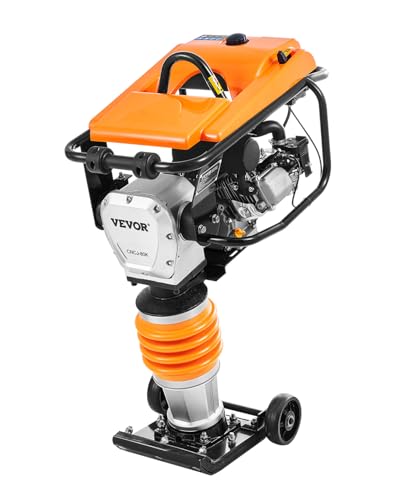
This four-spring model delivers up to 3600 lbs of impact force and a 26-inch depth, supporting quick and thorough compaction. The four-spring design helps smooth the rammer action, reducing fuel consumption and operator fatigue while minimizing vibrations. A 6.5 HP engine ensures ample power for dense soils and rugged jobs, making it suitable for foundations, slabs, and other heavy-duty tasks.
Designed with longevity in mind, this unit emphasizes stability and reduced wear over time. The multi-spring arrangement distributes impact more evenly, potentially extending the equipment’s lifespan and easing maintenance requirements during prolonged projects.
- 3600 lbs impact force
- 26″ compaction depth
- Four-spring design for smoother operation
Tomahawk 4 HP Honda Jumping Jack

The Tomahawk 4 HP Honda Vibratory Rammer delivers field density performance with a compactor force of 3,550 lbs per square foot, supported by a durable 13 by 11 inch steel shoe plate. The GX120R engine provides reliable power for mid-range to heavy-duty compaction tasks, including soil and small aggregates. This model is well-suited for footings, trenches, and moderate foundation work where consistent density is essential.
Users benefit from the rugged build and predictable performance, enabling precise compaction in tight corridors or challenging access areas. The footwear plate contributes to stable contact with the substrate, helping maximize the efficiency of each pass while maintaining operator control.
- 3,550 lbs per sq ft compaction force
- 13″ x 11″ steel shoe plate
- Honda GX120R engine
Tomahawk Power Jumping Jack 3 HP

The Tomahawk Power Jumping Jack Tamper for Asphalt and Cohesive Soil operates with a 3 HP Honda GX100 engine, delivering reliable density in a range of conditions. It achieves up to 3,350 lbs per square foot in compaction force and supports depths up to 26 inches. This makes it a versatile option for asphalt prep, trench bases, and compacting cohesive soils where a steady, controlled vibration is essential for uniform density.
Designed for efficiency, this model balances power, weight, and maneuverability to perform well in both tighter spaces and more open areas. The robust rammer action, paired with the GX100 engine, offers dependable performance across common site conditions.
- 3,350 lbs per sq ft compaction force
- Up to 26″ depth
- Honda GX100 engine
JLYNOWPT Jack Hammer Plate

The JLYNOWPT plate is a compact 12.2 by 8.2 inches accessory designed to accompany vibratory tampers and petrol breakers. Constructed from high-quality manganese steel, it offers wear resistance and longevity, with a lightweight profile at about 11 pounds. The plate is easy to transport and swap, serving as a practical add-on for achieving smoother transitions and targeted surface leveling on small to mid-sized projects.
Its features emphasize durability and portability: manganese steel construction resists deformation, while the quenching process enhances hardness. The plate’s compact dimensions and lightweight design support easy field use and quick on-site adjustments when working with soil, gravel, or other granular substrates.
- High-quality manganese steel
- Lightweight, portable (about 11 lbs)
- Compact dimensions for easy transport
Buying Guide: Key Considerations For Jumping Jack Compactors
Choosing the right jumping jack compactor requires weighing performance, site conditions, and long-term value. Here are essential factors to guide your decision:
- Project type and depth: Match the tool’s maximum compaction depth to your project needs. Foundations, footings, and slab bases benefit from deeper reach, while trench work may require tighter maneuverability.
- Impact force and plate size: Higher impact forces accelerate compaction but can ride harder on finished surfaces. A larger shoe plate can improve stability on uneven ground, but may reduce maneuverability in tight spaces.
- Engine power and fuel considerations: Gas-powered units offer portability but require fuel management and emissions awareness. Electric or more efficient designs may suit smaller jobs or indoor use, depending on model availability.
- Vibration and durability: Four-spring or multi‑spring configurations often reduce vibrations and fuel consumption, potentially extending the life of the rammer and its components.
- Mobility and weight: Heavier units compact faster but are harder to transport. Consider a balance between rugged performance and on-site accessibility, especially for multiple job locations.
- Wear parts and maintenance: Look for readily available replacement shoes, springs, and gaskets. A model with plentiful service options minimizes downtime and keeps projects on schedule.
- Accessory compatibility: Plate accessories, shoe dimensions, and mounting compatibility influence versatility. Attachments can help tailor a rammer for soil, gravel, asphalt, or cohesive materials.
- Warranty and support: A solid warranty and accessible customer support reduce risk over the equipment’s life cycle and help with parts supply during busy seasons.
- Noise, emissions, and safety: Higher-powered industrial units generate more noise and exhaust; ensure compliance with site safety policies and local regulations. Operator training and PPE are essential for safe operation.
- Cost of ownership: Beyond upfront price, factor in fuel use, maintenance intervals, and potential downtime. Investing in models with longer service intervals can yield lower long-term costs.
When evaluating options, compare the five featured models on impact power, depth capability, engine reliability, and design features that reduce operator fatigue. For busy crews handling diverse materials and mixed terrain, models with multi-spring configurations, robust shoe plates, and trustworthy Honda engines tend to provide the best balance of performance and durability. Always verify compatibility with any site-specific requirements, such as noise restrictions or emission standards, before purchasing.