Kayak anglers rely on compact, reliable radar-like sonar and depth tools to map underwater terrain, locate fish, and navigate with confidence. This guide highlights top compact radar-ready devices and pedal-drive kayaks that pair well with fish finders, depth sensors, and castable radars. Explore modular kayaks with hands-free propulsion and versatile transducer mounts designed for tight spaces, weed-free propulsion, and shallow waters. Each selection focuses on portability, ease of use, and accurate readings for coastal, estuary, and freshwater environments.
Summary of selected products
- Reel Yaks 10ft Radar Propeller Drive Fishing Kayak — modular sit-on-top with hands-free pedal drive
- Reel Yaks 10ft Radar Fin Drive Fishing Kayak — modular, stable, lightweight pedal system
- Portable Rechargeable Fish Finder by Fuceter — wireless sonar with 105° beam
- LUCKY Kayak Portable Fish Depth Finder — handheld castable option
- WINDFRD Kayak Fish Finder Mount — universal mounting arm for radar and fish finder
Best Modular Pedal-Drive Kayaks For Radar Use

The Reel Yaks 10ft Radar Propeller Drive Fishing Kayak combines a compact, lightweight design with a powerful propeller drive for hands-free propulsion. It’s built to accelerate quietly and reverse maneuver smoothly, ideal for navigating docks, mangroves, and weed-free zones where radar readings are most useful. Assembly is simple and fast, and the modular sections are designed for easy transport without roof racks. With a 400 lb capacity, this kayak balances stability with portability for anglers who value speed and control on the water.
Key features support radar-like compatibility: quick four-step assembly, modular construction, and a lightweight 35-lb section with integrated handles. The hands-free pedal drive keeps both hands available for casting, scanning with radar apps, or monitoring fish activity. The setup is designed to minimize noise and interference while maintaining sturdy reliability in varying water conditions.
Practical use cases include shallow flats, marshes, and coastal estuaries where precise positioning and stealth matter. The propeller drive reduces drag, helps with subtle positioning near marine life, and enables smooth returns to favorable sonar ranges. The overall build emphasizes ease-of-use, portability, and dependable performance for kayak anglers who want radar-friendly navigation without bulk.
Radar-Ready Fin Drive Kayak For Quiet Waters

This model uses a lightweight fin drive system designed for quiet, stealthy propulsion in shallow waters. The 400 lb capacity and modular construction deliver stability and ease of transport, with a compact footprint suitable for GPS and radar accessories. Setup takes only a few steps, making it a practical choice for anglers who want to combine radar readings with precise water column awareness during low-noise fishing sessions.
Practical benefits include weed resistance and reduced snag risk due to the fin propulsion design. The vessel remains nimble enough to maneuver around structures while maintaining steady propulsion for consistent sonar depth readings. A successful pairing with radar or sonar devices is supported by the kayak’s low profile and portable size, which suits frequent back-and-forth trips to productive fishing spots.
Wireless, Castable Fish Finder For Kayaks

The Portable Rechargeable Fish Finder from Fuceter provides wireless sonar with a 105° beam angle and a 2.6–164 ft depth range. This castable device eliminates heavy cables and offers a TFT LCD display for clear readings in bright sunlight. The kit includes a mounting bracket and lanyard, facilitating easy use on a kayak or while camping near shore. It is designed to work with compact deployment, allowing anglers to extend sonar coverage without dragging a large transducer behind the kayak.
Features include a long operational range, a straightforward interface, and the ability to detect depth, water temperature, and fish presence. Its portability makes it a practical companion for radar or sonar mapping on small watercraft, enabling quick checks of underwater structure along a planned route. The device emphasizes user-friendly setup and reliable readings in varying light conditions.
LUCKY Handheld Kayak Fish Finder For Quick Readings
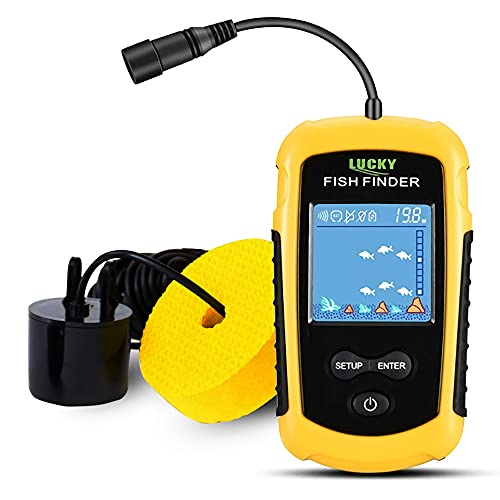
The LUCKY handheld fish finder is designed for portability, featuring a compact 2.4-inch display and a 26 ft operating distance with 328 ft depth detection. It displays fish depth, water depth, weeds, sand, and rocks, with adjustable units (feet or meters) and multiple sensitivity settings. The hand strap keeps readings accessible while you move along the kayak, and the device can operate in simulation or transducer modes, providing flexibility for training and field use.
Small, lightweight, and battery-conscious, this tool suits anglers who want quick situational awareness without heavy gear. Practical uses include scouting structure along a shoreline, locating vegetation edges for ambush points, and confirming depth trends during tidal movements. It’s an accessible option for beginners and seasoned kayak anglers seeking instant radar-like insight at a low equipment footprint.
Mounting Solutions For Radar And Fish Finders

The WINDFRD Mount is designed to simplify installing a fish finder screen and radar simultaneously. Its 1.5″ ball design offers strong clamping and full motion for easy positioning. The mount supports multiple screw hole patterns to fit a wide range of devices and provides included marine-grade fasteners for corrosion resistance. The extendable transducer arm reaches 11.42″ to 17.91″ with 360° adjustability, allowing precise alignment of sonar and radar equipment on a kayak or SUP.
Durability is enhanced by high-performance composite materials, ensuring stability in rougher conditions. This mounting solution is ideal for anglers who want a streamlined setup that minimizes clutter while maximizing accessibility to radar and sonar data. The track-based adjustability makes in-water repositioning quick and reliable for changing light, water, and fish-finder angles.
Garmin Striker Vivid 4cv — Compact Color Sonar

The Garmin Striker Vivid 4cv delivers a 4-inch color sonar experience with vivid scanning palettes for easy reading of fish and structures. It includes a GT20 transducer for CHIRP traditional sonar and CHIRP ClearVü, providing detailed views of underwater features. The device also includes high-sensitivity GPS for waypoint marking, routes, and speed monitoring. This compact unit is ideal for kayak setups where radar-style depth and fish indication benefits are augmented by clear color imaging and mapping capabilities.
Key attributes include user-friendly operation, reliable sonar visualization, and easy integration with existing Garmin ecosystems. The bright, color-rich display helps users interpret sonar returns quickly, improving decision-making while moving through variable underwater terrain. This option is well-suited for anglers who want dependable sonar performance without a bulky screen or complex controls.
LUCKY Handheld Kayak Depth Finder — Portable Depth Readings
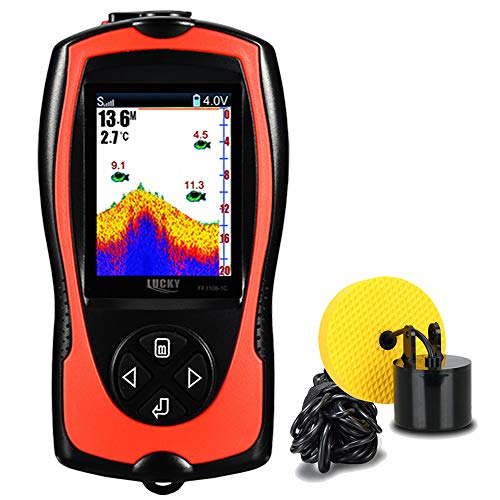
The LUCKY portable fish finder handheld unit focuses on depth, water temperature, and fish size readings. It offers 26 ft wired operation and 328 ft depth detection, with a beam angle of 45° at 200 kHz. The device is rechargeable and includes a USB charging option, enabling several hours of use. It’s designed for on-the-go kayak anglers who want a compact, dependable sonar aid without integrated mounting hardware.
For radar-ready setups, this handheld device provides quick checks of depth and fish presence at potential hotspots as you track a route. Its portability makes it suitable for experiments with different radar-inspired setups on various watercraft. Users can switch between transducer and simulation modes to practice and refine readings before heading to deeper water.
Buying Guide: Key Purchase Considerations For Kayak Radar Readers
- Precision and range: Consider depth range, beam angles, and the resolution of sonar or radar data. Wider beams cover more area but may reduce target detail; narrower beams provide precision for individual targets.
- Compatibility and integration: Ensure mounts, transducers, and mounting arms fit your kayak model and radar/fish finder gear. Look for 360° adjustability and quick-release options for portability.
- Weight, portability, and setup: Lightweight modular kayaks and compact castable devices reduce transport friction. Four-step assemblies and carry handles improve field usability.
- Durability and materials: Choose corrosion-resistant hardware and durable composite mounts for saltwater environments. Verify load ratings and stability for on-water use.
- Display readability and power options: A bright display with sunlight readability is essential. Battery life matters for long sessions; consider rechargeable options and USB charging.
- Ease of use and learning curve: User-friendly interfaces with clear menus and alarms help in making quick, accurate decisions while paddling or pedaling.
- Price vs. performance: Balance cost against features like GPS mapping, CHIRP sonar, and castable depth sensors. Prioritize features that directly enhance kayak navigation and fish targeting.
- Versatility: Consider mounts and accessories that enable both radar-like sonar for fish detection and general navigation mapping for safe travel in canals, estuaries, and open water.
Overall, the best kayak radar setup blends modular, easily assembled kayaks with reliable depth and fish-finder tools. When choosing, weigh portability, mounting options, and the specific water conditions you encounter most often. The right combination improves visibility of underwater structures, fish presence, and water depth, contributing to more informed decisions on every paddle or pedal stroke.