Maintaining proper chlorine levels is essential for safe, clear pool water. Too little chlorine allows bacteria and algae to flourish, while excess chlorine can irritate skin and eyes and affect water odor. This guide highlights practical ways to manage chlorine using select products designed to boost, sustain, or reduce sanitizer levels. You’ll find five relevant Amazon picks that address shocking, sanitizing with tablets, and lowering chlorine after over-chlorination. Use these options alongside regular water testing, pH balance, and cyanuric acid management to keep your pool comfortable and swim-ready.
Below is a quick summary of the chosen products. The table highlights each item’s primary role in chlorine management, so you can compare at a glance and plan your maintenance schedule with confidence.
| Product | Brand | Type | Key Benefit |
|---|---|---|---|
| HTH 52031 Swimming Pool Care Shock, Cal Hypo Formula, 13.3oz | HTH | Pool Shock | Fast-acting sanitizer; clears water; avoids CYA buildup |
| HTH 42052W Pool Care 3″ Chlorine Tabs Advanced | HTH | Chlorine Tablets | Sanitizer, clarifier, algaecide; long-lasting |
| HTH 42049 Pool Care 1″ Chlorine Tabs | HTH | Chlorine Tablets | Kills bacteria and algae; slow-dissolving |
| AquaDoc Bromine & Chlorine Neutralizer | MAV AquaDoc | Chlorine/Bromine Reducer | Reduces elevated chlorine and bromine levels |
| In The Swim Chlorine Neutralizer | In The Swim | Chlorine Reducer | Quickly lowers chlorine with sodium thiosulfate |
HTH Shock For Quick Chlorine Boost

HTH 52031 Shock uses a Cal Hypo base to deliver a rapid chlorine boost, making it ideal after heavy bather use, rainfall, or suspected contamination. The formulation supports sanitizing, clarifying, and preventing bacterial and algae growth when used as a weekly treatment. It is fast-acting and fast-dissolving, helping restore clarity within a day. Importantly, this Cal Hypo-based shock does not contribute cyanuric acid, reducing the risk of chlorine lock in outdoor pools. Follow label dosing to avoid over-shocking and ensure appropriate calcium balance for your pool surface and equipment.
Use cases include periodic “reset” shocking and post-event sanitation. For best results, dissolve the product according to the package directions in a bucket of water before applying to the pool with the circulation system running. Always test water after shocking to adjust remaining chemistry, including pH and alkalinity, to sustain a stable sanitizer level going forward.
HTH 3-Inch Chlorine Tabs Advanced

This product delivers sanitization, clarifying, and algaecide action in a single 3-inch tablet. Each tab is individually wrapped and designed to dissolve slowly, providing consistent chlorine release across the season. The formula is sun-protected to extend chlorine life, helping maintain clear water from early spring to fall. The long-lasting nature means fewer tablet replenishments, making it convenient for midseason maintenance on larger or heavily used pools. Regularly check chlorine levels and adjust as needed to prevent over-stabilization while keeping water sparkling clean.
As part of a balanced pool routine, these tablets pair well with regular pH and CYA testing. Place them in a floater or inline feeder designed for 3-inch tabs, ensuring even distribution and avoiding concentrated pockets near pool corners or equipment. This approach supports steady sanitizer levels without sharp spikes after routine additions.
HTH 1-Inch Chlorine Tabs
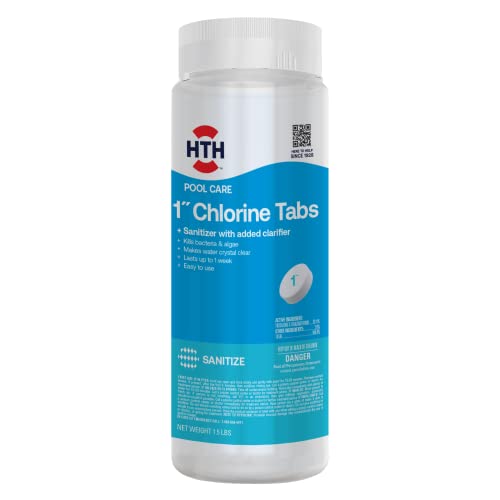
HTH 1-inch chlorine tabs are a compact option for maintaining sanitization with a slow dissolution rate, designed to last up to a week under normal conditions. Their added clarifier helps keep water visually clear while the chlorine works against bacteria and algae. These tabs are well-suited for smaller volumes or in combination with larger tablet forms in larger pools, hot tubs, or spa areas where precise dosing is needed. The slow dissolution helps minimize daily dosing while ensuring a stable sanitizer level between tests.
To use, drop the tabs into a feeder or floating dispenser compatible with 1-inch tablets. Regular testing remains essential to ensure chlorine levels stay within the recommended range and to align with pH and total alkalinity targets. Store away from moisture to preserve tablet integrity and effectiveness throughout the season.
AquaDoc Bromine & Chlorine Neutralizer

AquaDoc’s neutralizer uses a sodium thiosulfate-based formula to help reduce elevated chlorine and bromine levels after shocking or over-chlorination. This product supports balanced water conditions as part of a regular maintenance routine. By lowering sanitizer levels, it helps prevent uncomfortable high-chlorine conditions and can be an important tool during restocking of oxidizers or when recirculation is needed to rebalance water chemistry. Always re-test after dosing and adjust pH and alkalinity to maintain overall water balance.
For use, follow the dosage guidelines on the label and run your filter during distribution to ensure even mixing. This approach minimizes concentration hotspots and supports a smoother return to target sanitizer ranges, especially after chlorine spikes following heavy use or storm events.
In The Swim Chlorine Neutralizer

This chlorine reducer employs sodium thiosulfate to lower free chlorine levels quickly, making it a practical option after over-chlorination or when a rapid return to safe ranges is necessary. The formula is designed to dissolve evenly without premixing, simplifying the dosing process. The product is suitable for pools and spas, and the 2.25-pound package provides a generous supply for mid-season adjustments. Always test after use and re-balance the water chemistry to maintain comfortable, swimmer-friendly water.
When using this neutralizer, dosing should be aligned with test results and manufacturer guidance. Distribute evenly around the circulation system to avoid high-concentration pockets and ensure continued water balance as you bring sanitizer levels back to the target range.
Buying Guide
Know Your Target Chlorine Range
Most outdoor pools aim for a free chlorine range of about 1–3 parts per million (ppm). Hot tubs and spas may require higher levels, typically 3–5 ppm, due to smaller water volume and higher bather load. Always test water before and after applying sanitizers or neutralizers, and adjust pH (around 7.2–7.6) and total alkalinity to support stable chlorine performance. Cyanuric acid (CYA) levels influence how effectively chlorine remains available in sunlight; monitor and adjust CYA to prevent chlorine loss or lock.
Choosing Shock, Tablets, Or Neutralizers
Shocks are ideal for a rapid chlorine boost after heavy use or contamination. Tablets provide steady, long-term sanitization and can simplify dosing, especially when used with a feeder. Neutralizers are essential tools for correcting high chlorine or when you need to reset sanitizer levels after shocking. Consider pool size, feeder compatibility, and your weekly maintenance routine when selecting products to maintain consistent, safe water chemistry.
Safety And Handling
Always follow label directions and store chemicals in a cool, dry place away from sunlight and sunlight-exposed surfaces. Wear eye protection and gloves when handling pool chemicals, and never mix products in the same container unless specifically instructed. Test strips or a reliable test kit should guide dosing decisions, and you should recheck after any treatment to confirm levels are within the target range.
Dosing And Testing Tips
Regular testing is the cornerstone of effective chlorine management. Use a test kit to measure free chlorine, combined chlorine, pH, total alkalinity, and CYA. After adding shock or neutralizers, re-test 4–6 hours later and again the next day to confirm stabilization. Keep a simple maintenance schedule, noting when you apply shock, add tablets, or use a neutralizer, so you can anticipate dosages before swimmers arrive and after heavy use.
Pool Type And Maintenance Schedule
Different pool types—inground, above-ground, saltwater, or spa—require tailored chlorine strategies. Large or frequently used pools may benefit from a combination of tablets for continuous coverage and occasional shock for quick sanitation. Spas may need higher sanitizer targets and more frequent testing due to heat and higher flow. Align your product choices with pool size, water turnover rate, and local climate for a practical year-round maintenance plan.