Box jump training is a versatile way to build lower-body power, speed, and conditioning. The right equipment can adapt to your space, goals, and progression level—whether you are just starting out or dialing in advanced plyometrics. This guide highlights five top box jump options that balance safety, adjustability, and durability for American home gyms. Each product emphasizes different materials and construction, so you can compare how foam, wood, or padded designs align with your training style, space, and maintenance preferences.
Summary of chosen products
| Product | Brand | Height Options | Material | Weight (Approx.) |
|---|---|---|---|---|
| BalanceFrom 3-in-1 Foam Plyo Box | BalanceFrom | 16″, 20″, 24″ | High-density foam | Lightweight (about 10 lbs) |
| Fitvids 3-in-1 Foam Plyo Box | Fitvids | 16″, 20″, 24″ | High-density foam with anti-slip PVC cover | Lightweight |
| Yes4All 3-in-1 Wooden Plyo Box | Yes4All | 12″, 14″, 16″ | Wood (plywood) | Moderate (varies by box) |
| Epic Fitness 3-in-1 Foam Plyo Box | Epic Fitness | 20″, 24″, 30″ | High-density EPE foam | Light to moderate |
| OLIXIS 3-in-1 Plyometric Jump Box | OLIXIS | 16″, 20″, 24″ | Foam with non-slip surface | Light |
BalanceFrom 3-in-1 Foam Plyo Box

The BalanceFrom 3-in-1 Foam Plyo Box serves as a compact training platform for a range of plyometric and strength movements. Its foam core provides a forgiving landing surface that dampens impact, which can help reduce shin splints and joint stress during high-volume sessions. Three height settings—16, 20, and 24 inches—allow athletes to scale workouts from beginner box jumps to advanced depth jumps as technique and strength improve. Lightweight construction supports quick repositioning in small workout spaces, making it a practical choice for apartments or garages. The design emphasizes safety through cushioned material and rounded edges to minimize injury risk during dynamic drills.
With multi-height versatility, users can repeat explosive jumps, step-ups, and elevated push-ups to target different muscle groups. The foam box is easy to clean and maintain, ensuring a sanitary training surface between sessions. While it may not offer the same rigid stability as wooden boxes under maximal loads, its forgiving surface is well-suited for beginners, rehab-focused routines, and athletes who prioritize joint comfort during plyometrics. For those prioritizing a light, adjustable box for home use, this option blends value with practical performance.
Ideal applications include HIIT circuits, mixed-modal training, and functional conditioning. For best results, pair the BalanceFrom box with a non-slip mat or rug, maintain proper warm-ups, and progress height gradually to maintain form and safety throughout the session.
Fitvids 3-in-1 Foam Plyo Box

The Fitvids 3-in-1 Foam Plyo Box focuses on joint-friendly training with a high-density foam core that cushions landings and reduces impact on knees and shins. Its anti-slip PVC cover provides stable footing during jumps and step-ups, reinforcing confidence in every rep. The box offers three usable heights—16, 20, and 24 inches—achieved by rotating the sides, making it adaptable for beginners through to advanced athletes without needing multiple boxes. The soft, resilient surface helps minimize the risk of injury during quick transitions between heights or heavy sets.
Durability is built into the design for repeated home-use workouts, with a structure that maintains its shape under typical training loads. This makes it suitable for home gyms, conditioning programs, and interval training where rapid transitions are common. Users should ensure the surface is clean and dry before each session to maintain grip. The combination of foam safety and straightforward height adjustment makes it a practical option for families beginning plyometric work or athletes refining technique in a controlled environment.
Training recommendations include progressive height increases as form and confidence build, integrating box jumps with cardio bursts, and using the box for elevated push-ups or mountain climbers to diversify routines. Regular inspection of seams and corners will help ensure long-term performance and safety.
Yes4All 3-in-1 Wooden Plyo Box

The Yes4All 3-in-1 Wooden Plyo Box brings a solid, traditional option to box jump training. Available in 12, 14, and 16-inch heights, this wooden box is designed for high-load, high-intensity workouts and can support up to 450 pounds. The wooden construction provides a stable, rigid surface that some athletes prefer for precise foot placement and consistent rebound. Built-in handles and pre-drilled holes simplify assembly, and puzzle joints contribute to a snug fit between panels, reducing wobble during jumps.
Three height options let users tailor the training stimulus to their current level and progressions, from beginners focusing on controlled step-ups to advanced athletes performing explosive box jumps. The box is best suited for indoor training, garage gyms, or studios where a durable, long-lasting platform is valued. For maintenance, wipe down the surface to prevent scuffing and check for any loosened joints after heavy sessions. This model pairs well with floor mats or gym flooring to protect impact areas and neighboring equipment.
For trainees prioritizing a wood-based platform with a minimalist setup, this option offers dependable stability and a classic feel. Ensure proper form on each rep to maximize benefits and minimize knee or ankle strain during plyometrics.
Epic Fitness 3-in-1 Foam Plyometric Jump Box
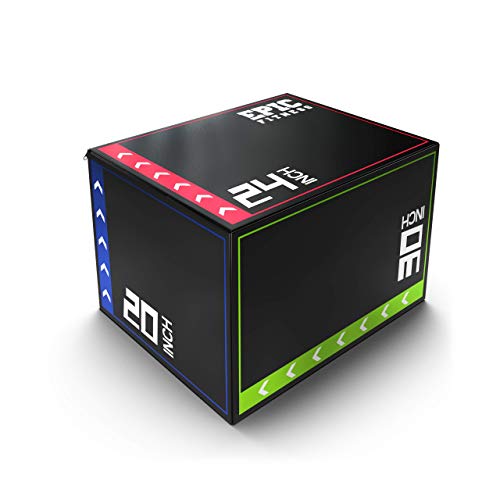
The Epic Fitness 3-in-1 Foam Plyometric Jump Box uses a high-density EPE foam core wrapped in a non-slip PVC leather cover, providing a balance of cushion and stability. Heights of 20, 24, and 30 inches support a broad range of training levels, from basic box step-ups to advanced depth jumps. The foam construction reduces the risk of shin contact and streamlines movement, which can be advantageous for beginners or athletes returning from breaks who want gentler progression without sacrificing intensity.
Three difficulty levels allow a scalable approach to plyometrics and conditioning. The non-slip cover helps maintain footing during rapid sequences, while the foam interior absorbs impact and protects joints during landing. This model suits HIIT sessions, CrossFit-style workouts, MMA conditioning, and general fitness routines that combine strength, power, and speed work.
When integrating this box into a program, combine height progression with proper warm-ups, mobility work, and cooldown stretches. Inspect the cover for wear and ensure the foam maintains its shape after heavy training cycles to preserve safe landings.
Yes4All 3-in-1 Soft-Padded Plyo Box

The Yes4All Soft-Padded Plyo Box combines a wooden core with three height options (16x14x12 inches overall footprint) and a padded vinyl cover for added comfort. The three-height design supports scalable training while maintaining a compact footprint, making it suitable for smaller spaces. The padded surface helps cushion landings, which can reduce discomfort during higher-volume sessions and support rapid training cycles in tight spaces.
This model emphasizes stability through a layered construction that includes EVA foam and vinyl, providing a stable base for step-ups, jumps, and lateral movements. Its three-position adjustment helps users tailor intensity without needing to switch equipment. For maintenance, wipe clean after workouts and check the vinyl seam integrity during routine checks to ensure continued safety and performance.
Ideal for home gyms where a softer landing is prioritized, this box supports a variety of movements while remaining space-efficient and easy to store between sessions.
OLIXIS 3-in-1 Plyometric Jump Box

The OLIXIS 3-in-1 Plyometric Jump Box offers a lightweight, versatile platform with three height options: 16, 20, and 24 inches. Its non-slip cushioned design provides a secure surface for jumps, hops, and step-ups, which can help athletes maintain proper form during dynamic movements. Weighing roughly 10 pounds, it’s easy to move and store in smaller spaces without sacrificing stability during use. The box’s rotation-based height adjustment makes it simple to switch levels mid-workout, which is ideal for interval training and progressive programming.
Users can benefit from its compact footprint and portability while preserving a degree of rigidity similar to foam-filled alternatives. Regular inspection of the textured surface and seams will help maintain safety in high-intensity sessions. This model suits individuals who want a straightforward, multi-height plyo box that blends portability with reliable performance for home gyms and small studios.
Buying Guide: Key Purchase Considerations And Comparisons
When selecting box jump equipment, focus on how material, height range, stability, and portability align with your training goals and space. Consider the following factors to make an informed choice:
- Height range and progression: If you’re a beginner, start with lower heights (12–16 inches) and gradually increase as form improves. A 3-in-1 design that rotates among 16, 20, 24 inches (or more) supports steady progression without buying multiple boxes.
- Material and impact: Foam and padded foam-core boxes cushion landings and reduce shin injuries, making them friendlier for beginners or rehab-focused sessions. Wooden boxes deliver rigid stability and precise foot placement, which some athletes prefer for explosive jumps. Consider a mix depending on training days and goals.
- Surface grip and durability: Anti-slip covers or textured surfaces improve stability during fast transitions. For wooden boxes, smooth edges and puzzle joints decrease snag risks, while foam boxes require regular surface checks to maintain grip as surfaces wear.
- Weight and portability: Lighter foam-based boxes (often around 10 pounds) are easier to move between spaces, which is valuable for home gyms with limited storage. Heavier wooden boxes stay stable but can be harder to reposition during workouts.
- Footwear compatibility and space: Ensure the box size fits your training area and that footwear provides adequate grip on the chosen surface. Place the box on a non-slip mat or gym flooring to prevent shifting during jumps.
- Maintenance and hygiene: Foam surfaces are easy to wipe down; vinyl coverings should be cleaned to prevent residue buildup. Wooden boxes benefit from occasional conditioning of the surface to preserve edges and joints.
- Safety and supervision: For beginners, use a trainer or spotter during first sessions to reinforce proper landing mechanics and to minimize injury risk during high-impact moves.
- Cost vs value: Foam and padded options typically offer lower price points and added comfort, while wooden boxes may provide longer-term durability for heavy users. Weigh your training frequency and intensity against the upfront cost.
- Use-case versatility: Box jumps are just one element. Many models also support step-ups, elevated push-ups, and core variations, enabling fuller-body conditioning within a compact footprint.
Bottom line: For beginners or athletes prioritizing joint comfort, foam-based 3-in-1 boxes with multiple height settings provide a flexible and safe entry point. For those who value rigid stability and a traditional feel, wooden plywood boxes remain a trusted option, especially in spaces designed for heavy plyometrics. A mix of foam and wooden platforms can cover a broad range of drills and progression schemes, enhancing overall athletic development while preserving space and budget.