Choosing the right bowling ball for a house shot can improve accuracy on the dry lanes common in many home alleys. This guide spotlights five well-rounded options that balance control, ease of use, and value for American bowlers who bowl on typical house patterns.
From economical plastic models to pearl and reactive options, these picks cover a range of skill levels and lane conditions. The goal is consistent hits and repeatable motion on a house oil pattern, without overreacting to every slight variation in oil.
| Product | Brand | Weight | Coverstock | Notable Benefit |
|---|---|---|---|---|
| Pyramid Path Bowling Ball (Emerald/Black/Silver, 10 LB) | Pyramid | 10 lb | Polyester | Great for straight shots on house lanes |
| Hammer Black Widow Tour V1 Bowling Ball (15 Pounds) | Hammer | 15 lb | Reactive with HK22 base, Aggression Hybrid | Controlled motion with early lane read |
| Brunswick TZone Indigo Swirl Bowling Ball (14-Pounds) | Brunswick | 14 lb | Polyester | Economical, beginner-friendly |
| Champion Sports Rubberized Plastic Bowling Ball – 3 LB Orange | Champion Sports | 3 lb | Plastic | Bright color; easy grip for kids |
| Ebonite Game Breaker 5 Pearl Bowling Ball (13 lb) | Ebonite | 13 lb | Pearl (HK22 Enhanced) | Versatile length and backend motion |
Pyramid Path Bowling Ball For House Shots

The Pyramid Path relies on a polyester coverstock, which delivers maximum straightness and predictable travel on the dry, low- to mid-oil patterns typical of many home lanes. At 10 lb, the ball is a practical choice for lighter players or bowlers who prioritize form and accuracy over heavy hook potential. Polyester is less sensitive to lane transitions, so shots tend to stay on target even as the oil pattern ages during a game. Built with Pyramid quality, this ball is designed for reliability and durability in a home setting.
With a straightforward arc and consistent roll, the Path is an excellent training partner for players learning to target the pocket on house shots. The weight range also accommodates junior bowlers who are building strength and control. While not designed for maximum hook on oily lanes, its predictability can help bowlers refine release rhythm and aiming points. For households prioritizing spare conversion and repeatable accuracy over aggressive breakpoints, the Pyramid Path stands out as a dependable, economical option.
Hammer Black Widow Tour V1 For House Shots

The Black Widow Tour V1 represents a modern evolution of the Widow line, offering smoother, more controllable motion and a lane-read you can trust on house patterns. It features the HK22 base with Aggression Hybrid additives, which help the ball read the lane early and provide a consistent read from the foul line to the pocket. A notable adjustment is a reduced differential—over 20 points lower than prior Widow variants—designed to deliver a more controlled motion without sacrificing the core’s punch. This makes the Tour V1 a versatile choice for bowlers seeking predictable curves at home.
On typical house oil, this ball can provide a reliable, repeatable path with a strong but manageable break point. The combination of a predictable midlane read and controlled backend movement helps players place shots more consistently. For bowlers who want to upgrade from a basic plastic ball but still need to manage hook on thinner house oil, the Tour V1 offers a balanced option that blends power with precision. Its design is particularly suitable for players who value lane adaptation and shot-to-shot consistency during practice and league play alike.
Brunswick TZone Indigo Swirl For Home Lanes

The Brunswick TZone Indigo Swirl is a polyester ball designed for casual and beginning bowlers. Its coverstock offers reliable length and a smooth arc on dry lanes, making it a practical choice for home lanes where oil patterns are predictable. The 14-pound variant is a common weight for adults who want a balanced blend of control and strength without challenging a player’s technique. A high-gloss finish helps reduce friction in the lane and keeps shots on a consistent line, which is beneficial for players who are building consistency in their release and targeting.
Affordability and ease of use are central to the TZone’s appeal. For households that want a no-surprises option that can be picked up by players of varying ages and skill levels, the Indigo Swirl provides dependable performance without requiring extensive setup or learning curves. It’s a practical choice for family leagues, school programs, or simply practicing spare shooting at home, where straightforward behavior on the lane is valued as much as strike potential.
Champion Sports Plastic Bowling Ball For Beginners
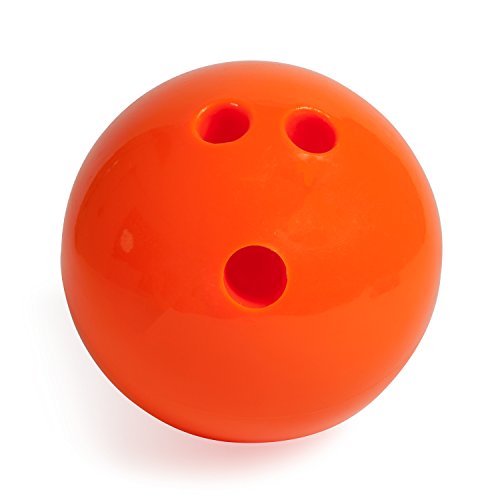
The Champion Sports Rubberized Plastic Bowling Ball is a compact option designed for beginners and younger players. Weighing in at 3 lb, its bright orange color enhances visibility and makes it easy to track in the air and on the lane. The ball is rotomolded and seamless, with a comfortable grip suitable for developing hands. Its simple construction supports predictable, straight shots, which is ideal for building fundamentals such as stance, release, and scoring spare shots on home lanes.
Because of its plastic composition, this ball maintains a straightforward path with minimal curve, making it a dependable teaching tool in classrooms, game rooms, and home bowling sets. The bright color and easy handling contribute to a positive early experience, encouraging consistency and confidence as new bowlers learn how lane conditions influence ball motion and pocket alignment.
Ebonite Game Breaker 5 Pearl For House Shots

The Game Breaker 5 Pearl combines a pearl coverstock with HK22-enhanced technology and the GB 12.7 Pearl additives to deliver a compelling blend of length and backend motion. The ball sits on the flagship GB family’s Enhanced V2 symmetrical core, which has been historically reliable for a wide range of players. On a typical house shot, the pearl formulation helps the ball traverse the lane with enough length to avoid early hooking, while still providing a controllable breakpoint as oil transitions are encountered.
This model offers versatility across skill levels, from improving consistency on dry boards to adding predictable motion for more experienced players who want to fine-tune pocket targets. The combination of length, control, and a stable core makes it a solid option for households that want a single ball capable of handling multiple house-shot scenarios and practice routines without switching gear mid-game.
Buying Guide
When selecting a bowling ball for house shots, several factors influence performance, value, and long-term satisfaction. The goal is to choose a ball that delivers predictable motion, comfortable weight, and reasonable durability for home-use conditions. The following considerations help compare common options and identify the best fit for different players and lanes.
- Coverstock Type — Polyester (plastic) balls offer the most straightforward, straight-line paths with minimal hooking, making them ideal for beginners and training shots on dry house lanes. Pearl and reactive coverstocks increase length and backend reaction but can be harder to control on variable oil. For home lanes with light to moderate oil, a polyester or hybrid approach often yields steady results.
- Lane Conditions — House shots typically feature easier oil patterns that can dry out along certain boards. Balls with moderate length and predictable backend help reduce over-hooking and keep shots in play through the pocket consistently. If lanes are notably dry, polyester may be preferred; if there’s some surface oil, pearl or reactive options can offer a useful advantage if released with discipline.
- Ball Weight and Fit — Weights commonly range from 10 to 15 lb for adults, with lighter weights for youth. The weight should feel comfortable to swing, with a stable release and solid grip. A heavier ball can yield more pin action but may compromise control for beginners or youth bowlers.
- Durability and Maintenance — Plastic and polyester balls tend to resist surface wear and skidding longer on home lanes. Reactive and pearl balls require more consistent cleaning and surface maintenance to preserve their motion. Regular wiping and occasional resurfacing can extend the life of reactive balls used on home lanes.
- Budget and Value — For home use, polyester options typically provide the best value due to lower cost and simpler maintenance. If a bowler plans to advance to league play or needs a ball that can transition from straight shots to more curved lines, consider an affordable pearl or reactive ball with a controllable motion profile.
- Experience Level — Beginners benefit from easy-to-control plastic balls, while improving bowlers can experiment with pearl or reactive options to develop length and breakpoints. Young players may start with lighter weights to encourage proper form and rhythm.
- Testing and Demos — If possible, test a few balls before purchasing. Renting or borrowing from a league shop or friends can help gauge which coverstock and weight best suits your home lanes and release style.
- Maintenance Routine — Clean the ball after each use to remove oil residues and restore surface grip. Store it in a cool, dry place to prevent coverstock drying or cracking, especially for younger players who frequently handle the equipment.
In summary, for typical house shots, a starter polyester ball like Pyramid Path or Brunswick TZone Indigo Swirl offers dependable straight lines and ease of use. A more advanced option, such as the Hammer Black Widow Tour V1 or the Ebonite Game Breaker 5 Pearl, can provide longer trajectories and controlled hook when released with proper technique. For younger bowlers or practice sessions in a gym or classroom setting, the Champion Sports plastic ball presents a cost-effective choice with straightforward handling. The final decision should balance weight comfort, lane conditions, and the player’s current skill level to achieve consistent results on home lanes.