Fishing often requires clear, steady views near water. The best binoculars for fishing combine waterproof and fogproof sealing, bright optics, and a comfortable fit for long sessions aboard a boat or along the shoreline. The options below cover floating and marine designs, compact travel binoculars, and models with built-in navigational aids like rangefinders and compasses. This guide summarizes five suitable picks and compares their magnification, light transmission, and durability to help you choose for boat trips, shore fishing, or wildlife watching around water.
| Product | Brand | Magnification / Objective | Key Feature | Notes |
|---|---|---|---|---|
| Bushnell H2O Xtreme 10×42 | Bushnell | 10×42 | Fully Multi-Coated, BaK-4 Prisms | Compact, waterproof for boating |
| 20×50 High Powered Binoculars | FLYANT | 20×50 | Ultra long-distance clarity | High magnification; suitable for distant viewing |
| Floatmaster 7×50 | Barska | 7×50 | Floating, Floatable; Marine ready | Buoyant and rugged for water use |
| USCAMEL 10X50 Marine | USCAMEL | 10×50 | Rangefinder & Compass | Built-in navigation aids |
| HOOWAY 7×50 Marine | HOOWAY | 7×50 | Nitrogen-purged, Fog proof | Internal rangefinder & compass |
Below are five carefully selected options that balance marine durability, optics quality, and practical features for fishing enthusiasts. Each entry highlights how the model serves on the water, from recognizing distant buoys to tracking movement along waves.
Bushnell H2O Xtreme 10×42 Binoculars

The Bushnell H2O Xtreme line is designed for wet environments, offering 10×42 magnification with waterproofing suited for boating and on-deck use. The model is built around BaK-4 prisms, which help preserve bright, clear images in variable light. Upgraded to fully multi-coated glass surfaces, the optics aim to maximize light transmission and reduce glare during dawn or dusk fishing sessions. The result is a compact pair that prioritizes reliability in salt spray and splashes, while keeping a practical eye-relief and grip for moving vessels.
FLYANT 20×50 High Powered Binoculars

These binoculars offer a high magnification of 20x with a 50mm objective, delivering a broad field of view at long distances. They feature multilayer-coated aspherical optics and Bak-4 prisms to improve brightness and reduce distortion. The design emphasizes light transmission for distant sightings—helpful when identifying fish activity far from shore or spotting wildlife on the horizon. While higher magnification can reduce stability, this model pairs with a steady stance or a tripod for shore or vessel use, making it a strong choice for anglers who prioritize distant detail.
Barska Floatmaster 7×50 Marine Binoculars

The Barska Floatmaster is explicitly designed for water environments. Its 7×50 configuration provides a wider field of view and steadier viewing, ideal for spotting birds, buoys, and distant activity on the water surface. The binoculars are described as dry nitrogen-purged and sealed, enhancing fogproof performance in humid boat cabins or misty mornings. The floating feature minimizes loss if dropped overboard, a practical safeguard for anglers, deckhands, or recreational boaters who frequent the shoreline and harbor areas.
USCAMEL 10X50 Marine Binoculars
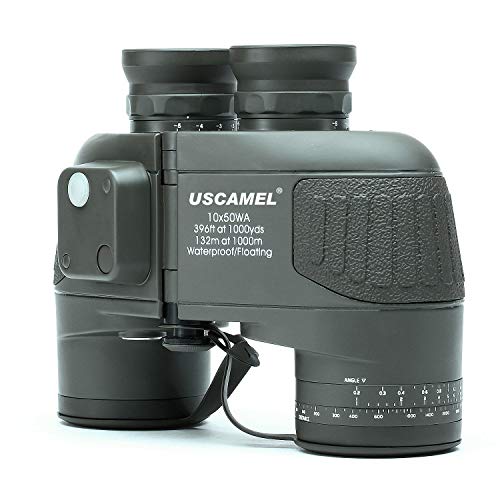
USCAMEL’s 10×50 marine binoculars integrate a built-in rangefinder and illuminated compass, offering directional help and distance estimation in marine conditions. The 50mm objective lens supports brighter images in lower light, while 10x magnification helps with distant observation along shorelines or at sea. High-quality Bak-4 prisms and FMC coatings contribute to color accuracy and light transmission. The combination of practicality and navigational tools makes these a versatile option for anglers who want quick, on-the-water orientation and target assessment.
HOOWAY 7×50 Marine Binoculars
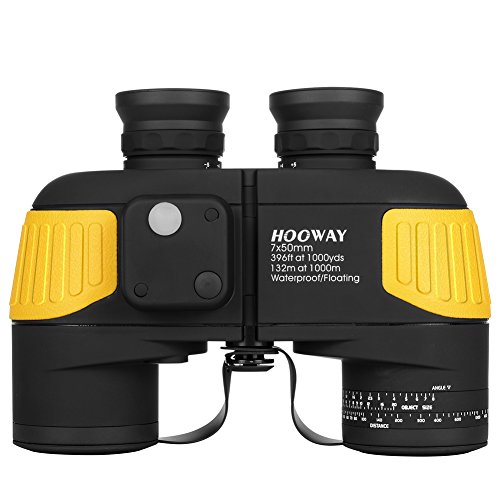
HOOWAY’s 7×50 marine binoculars are positioned for navigation and all-around viewing on the water. The 7x magnification provides a steadier image and a wide field of view, which is beneficial when scanning a busy marina or tracking moving targets at sea. Features include nitrogen-purged fog proofing and a robust Porro prism design to deliver bright, crisp images. The internal rangefinder and compass add navigational value for boaters and anglers who navigate coves, channels, or coastal waters with confidence.
Occer 12×25 Compact Binoculars
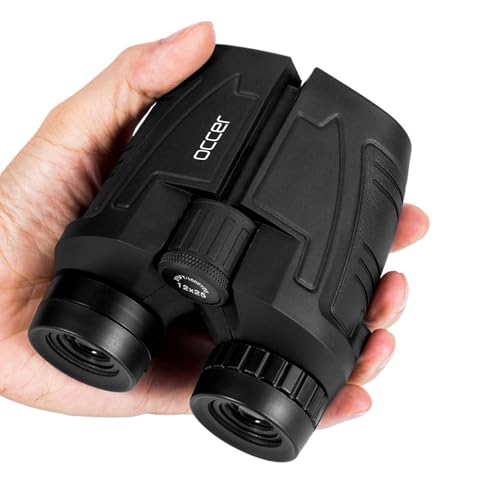
Occer’s compact 12×25 binoculars push magnification in a small frame, making them suitable for travel and shore excursions. The 25mm objective lens and FMC broadband coatings help deliver brighter images with reduced glare in variable outdoor light. The long eye relief and adjustable eyecups support users with or without glasses, enhancing comfort during extended viewing sessions. While compact, these binoculars are designed to balance portability with reasonable light transmission for general wildlife watching around water bodies.
Buying Guide: How To Choose The Right Binoculars For Fishing
Choosing the right marine or fishing binoculars involves balancing several factors. The following considerations cover core optics, durability, and on-water practicality from multiple perspectives.
- Waterproofing and fog resistance: Look for models with sealed housings and nitrogen-purged interiors to minimize internal fogging and protect optics from spray and humidity. Marine and boating contexts demand reliable performance in variable weather.
- Magnification versus stability: Higher magnification (e.g., 12x or 20x) reveals distant details but can be harder to stabilize, especially on a moving boat. Models in the 7x to 10x range often provide the best balance for fishing and general use aboard a vessel or on shore.
- Objective lens size and light transmission: Larger objective lenses (40–50mm) gather more light, which is helpful at dawn or dusk. However, bigger lenses add weight. Consider how you balance brightness with handling comfort.
- Prism and coating quality: Bak-4 prisms with fully multi-coated or FMC coatings maximize light transmission, reducing color shift and improving brightness and contrast in challenging lighting conditions.
- Eye relief and wearing glasses: Adequate eye relief and adjustable eyecups improve comfort for users who wear glasses. This is especially important during long sessions on a boat or dockside.
- Durability and buoyancy: For boating and fishing, buoyant or floating designs help protect from accidental drops. Look for models built to withstand salt spray, humidity, and occasional bumps.
- Built-in navigational aids: Some marine binoculars include rangefinders and compasses. These features assist with distance estimation and direction, which can be useful when navigating or coordinating fishing spots offshore.
- Weight and ergonomics: A comfortable grip and balanced weight reduce fatigue during extended use. Heavier models may require stabilization or a tripod for best results in distant viewing.
- Maintenance and warranty: Opt for models with clear maintenance guidance and a dependable warranty. Regular cleaning and proper storage extend the life of the optics in marine environments.
- Price-to-performance: Marine binoculars span a wide price range. Prioritize features that directly affect on-water use, such as waterproofing, light transmission, and buoyancy, rather than chasing the highest magnification alone.
Across these five selections, the common thread is reliability in wet, dynamic environments paired with optics that stay bright under varying light. For boaters focused on distant sightings, models with larger objective lenses and higher-quality coatings benefit from more light transmission. For shore anglers, a wider field of view and easier handling can improve quick target recognition in moving conditions. For navigational use, rangefinders and compasses provide practical on-water situational awareness. When choosing, consider how you’ll use the binoculars most often and select a balance of magnification, brightness, and durability to fit your fishing activities.