On windy beaches, you need shade that stays put and shelters you from sun and gusts. This guide highlights wind-friendly beach tents and accessories that balance stability, quick setup, and sun protection. The selections feature wind-powered Shibumi Shade models, a wind-assisted accessory, and other wind-resilient options designed for groups or solo beach days. The table below offers a quick snapshot of each option to help you compare at a glance.
| Product | Brand | Key Feature |
|---|---|---|
| Shibumi Shade | Shibumi Shade | 150 sq ft, Wind-Powered, UPF 50+ |
| Shibumi Shade Mini | Shibumi Shade | 75 sq ft, Wind-Powered, Ultra-Light |
| UMARDOO 10×10 Beach Tent | UMARDOO | Wind-Resistant, 10×10 ft, UPF 50+ |
| Gorich Beach Tent | Gorich | 86.6x59x48 in, Lightweight, UV Shield |
| Raynesys Beach Tent | Raynesys | UPF50+, 1-3 Person, Ventilated |
Shibumi Shade — Original Wind-Powered Beach Canopy

The Shibumi Shade is a 150-square-foot beach canopy designed to provide substantial shade for larger groups—up to eight people—while remaining portable. It offers UPF 50+ sun protection, creating a cool refuge from intense UV radiation. Weighing only about 4 pounds, it folds into a compact size and comes with a portable carrying bag for easy travel. This model is built as an Original Wind-Powered Sun Shade that sails with as little as 3 mph of wind, allowing it to perform in conditions where traditional tents might struggle. Setup is described as a quick, three-minute process, making it practical for spontaneous beach days.
In windy conditions, the wind-powered design is a standout feature, reducing the risk of toppling or collapse common with lightweight tents. However, to function properly, it relies on wind; on very still days, wind assistance may be minimal. The shade’s large footprint means it offers abundant space for gear and people, which is ideal for families or friends who need room for chairs, coolers, and bags. Durability comes from quality materials and a simple frame that remains relatively easy to assemble and reconfigure on-site.
For shade planning, consider your beach’s typical wind profile and wind direction. The Shibumi Shade excels where a steady breeze is common, or where you can position the canopy to maximize wind aid. It is less suited to very strong gusts if anchored poorly, so ensure solid placement and follow the included guidance for anchoring and maintenance.
Shibumi Shade Mini — Wind-Powered Beach Canopy

The Shibumi Shade Mini is a compact, wind-powered canopy offering about 75 square feet of shade, with UPF 30+ sun protection. It weighs roughly 2 pounds and folds into a small carrying size, making it an ideal travel companion for beach trips. While smaller than the original, the Mini is still designed to ride the wind on breezy days and is described as a true wind-powered shade that won’t break in gusty conditions. The Mini’s portability makes it suitable for travelers who want a quick setup in crowded shorelines or for packing into carry-on luggage for international beach trips.
Setup remains straightforward, with the wind-assisted design helping the canopy hold its position in light-to-moderate wind. It’s best used in environments where a steady breeze exists, and where you’ll have space to anchor and position the shade. For those who prioritize ultra-lightweight gear without sacrificing wind-compatibility, the Mini provides a balanced choice between space and portability.
UMARDOO Family Beach Tent Canopy — 10×10 Ft

UMARDOO’s family-size beach shade offers a full 10×10-foot footprint with a height of about 6.5 feet, designed to accommodate 4 to 8 people. A standout feature is its wind-resisting stability: four aluminum poles paired with four sandbags and windproof ropes form a strong triangle posture that resists wind loading. The canopy fabric is UPF 50+ and water resistant, with rust-proof aluminum poles secured by elastic cords to prevent movement during gusts. This tent emphasizes durability and adaptability, allowing families to adjust the angle of shade by repositioning sandbags or poles to optimize wind resistance and comfort on changing beach conditions.
The UMARDOO model balances space and wind resilience with portable design: it’s designed for quick setup and breakdown, and its structure is built to hold up under typical wind while remaining portable enough to carry on trips. For beach days with larger groups or where wind is variable, this tent offers a dependable combination of shade, protection, and stability while remaining relatively easy to transport between locations.
Gorich Beach Tent Sun Shelter — Large, Portable
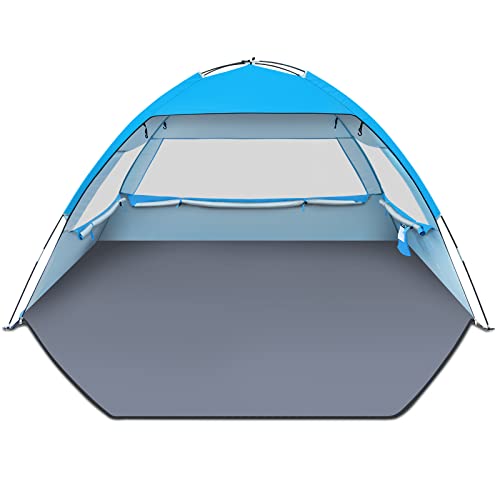
Gorich’s beach tent offers a spacious footprint—86.6 inches long by 59 inches wide and 48 inches tall—with a light frame that weighs about 3.5 pounds. The tent emphasizes durability through a silver-coated fabric intended to enhance UV protection and shading. Its 8.0 mm fiberglass poles contribute to a more rigid structure suited for maintaining shape in breezy conditions. The design highlights portability and ease of setup, with a compact carrying bag that makes it simple to stow and carry between destinations. The larger footprint helps accommodate families and larger groups on windy days, while the lightweight build supports travel to different beaches.
While Gorich emphasizes size and portability, users should still consider anchoring methods to maximize wind resistance in gusty environments. The combination of sturdy materials and a relatively low weight can be advantageous on breezy shores, provided proper anchoring and positioning are used to counteract wind forces.
Raynesys Beach Tent Sun Shelter — UPF50+ Shade

Raynesys offers a beach shade tent sized for 1-3 people with a square-top design that provides 30% more interior space than typical dome tents in its class. The fabric is silver-coated for UPF50+ sun protection and includes dual doors with mesh windows to optimize ventilation and views while maintaining airflow. The design emphasizes easy setup and portability, with a compact form that travelers can carry to improve comfort on crowded beaches. The 2-door configuration allows for flexible entry, while the silver-coated fabric helps block heat and protect occupants from direct sun exposure on windy days where shade placement matters.
Raynesys is well-suited for small groups seeking a balance of shade, ventilation, and portability. On windier beaches, ensure the tent is anchored securely and placed with favorable wind direction in mind to prevent movement or instability. While not explicitly wind-powered, its ventilation and UV protection make it a practical option for breezy conditions when combined with sturdy anchoring methods.
Buying Guide
- Wind-resistance features: Look for wind-powered shade designs (like Shibumi models) or tents with sturdy anchoring options (sandbags, windproof guy lines). A canopy that relies on wind should be paired with secure stakes or weights and proper positioning to maximize performance.
- Shade area and capacity: Choose an area that fits your group size plus gear. Larger footprints reduce crowding and allow chairs and coolers, but they require more anchoring and may be heavier to transport.
- Materials and sun protection: UPF ratings indicate how well fabric blocks UV rays. Silver-coated fabrics often improve shade performance and heat reduction. Consider durability, water resistance, and breathability of the fabric.
- Portability and setup time: If you travel by car or plane, weight and pack size matter. Wind-powered designs can offer rapid deployment in breezy conditions, while traditional tents may require more time to assemble but rely less on wind.
- Anchoring and stability: Sandbags, stakes, and guy lines are essential in windy environments. Check what’s included and whether additional accessories (like the Wind Assist) improve stability on gusty days.
- Ventilation and privacy: Ventilation through mesh panels or side openings helps airflow and comfort. Consider privacy features if you’ll be near others or need a private changing area.
- Durability and weather readiness: Examine frame material (aluminum vs fiberglass), fabric quality, and seam construction. A well-built tent or canopy reduces maintenance and increases longevity in coastal weather.
- Storage and transport: Check how compact the packed size is and whether the bag, straps, or carry case fits in your planned travel mode. Portability matters for frequent beach trips.