For players seeking enhanced hand-eye coordination, bat control, and swing consistency, a ball-on-a-stick training tool offers a focused way to practice. These devices simulate pitches while keeping training efficient and portable, ideal for home use, fields, or warm-ups. The following selections emphasize durability, adjustable pitch scenarios, and comfortable handling to support one-on-one coaching and solo practice alike.
| Product | Brand | Key Benefit |
|---|---|---|
| DeeHai Baseball Hitting Stick, 52″ | DeeHai | One-on-one training with carbon fiber shaft |
| SKLZ Hitting Stick 52″ | SKLZ | Coaching tool for warm-ups and ball contact |
| Tomaki Hitting Stick 54″ | Tomaki | Multiple pitch positions for varied practice |
| PLAYAPUT Dual-Head 54″ | PLAYAPUT | Beginner and advanced ball heads for all levels |
| DeeHai Baseball Hitting Stick Red 54″ | DeeHai | Extended grip with secure strap for any location |
The following five products are among the best options for batting practice with a ball on a stick, focusing on adjustability, grip comfort, and realistic swing feedback. All items support one-on-one coaching and team warm-ups, making them versatile for players at all levels.
DeeHai Baseball Hitting Stick, 52″

This batting training stick features a carbon fiber shaft with a premium ball head and a non-slip extended grip with a strap for secure handling. Designed for one-on-one training, it helps players practice different pitches and adjust posture to improve control over the ball. Its wide usability makes it suitable for warm-ups before games or at-home practice, enabling batting skill development anytime, anywhere.
SKLZ Hitting Stick Batting Swing Trainer, 52-Inch
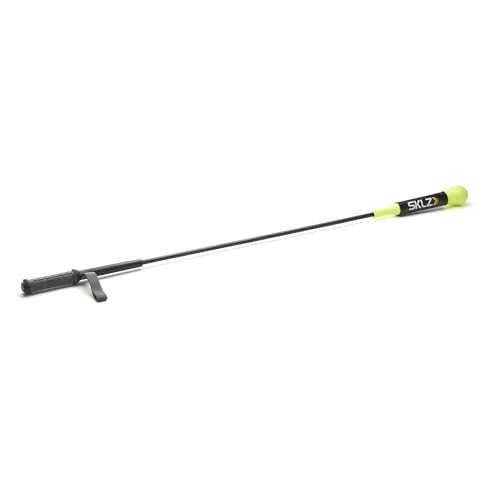
As a one-on-one coaching tool, this SKLZ trainer is ideal for warm-ups and practicing ball contact. It offers a comfortable grip that makes it accessible for coaches to guide players during drills, with a focus on improving hand-eye coordination, swing timing, and bat control.
Tomaki Hitting Stick Batting Swing Trainer, 54″

This tool supports one-on-one coaching experiences and features multiple ball target positions to teach players to react to inside, outside, high, and low pitches. It helps improve swing consistency, stance, and contact by allowing quick adjustments during practice, both at home and on the field.
SKLZ Hitting Stick, Select 52″ with Impact Absorbing Handle

This model emphasizes impact absorption at the handle, providing a secure, stable grip during training. It suits youth athletes for on-field warm-ups or home practice, supporting improvements in ball contact quality and overall swing technique through repeated one-on-one coaching sessions.
PLAYAPUT Baseball/Softball Hitting Stick Dual-Head, 54″

Equipped with two ball heads—one large for beginners and one small for advanced players—this trainer supports a range of levels. It enables practicing high, low, inside, and outside pitches to build confidence, improve hand-eye coordination, and develop consistent hitting mechanics through solo or coached sessions.
Buying Guide
When choosing a ball-on-a-stick batting trainer, consider these factors to align with skill level and training goals:
- Pitch range and adjustability: Look for models offering multiple target positions to simulate a variety of pitches and improve quick reaction times.
- Grip comfort and durability: A secure, non-slip grip with a robust shaft reduces fatigue during longer practice sessions and ensures stable control.
- Head design: Dual-head or adjustable ball heads can accommodate beginners and advanced players, aiding gradual skill progression.
- Portability: Lightweight designs with foldable components or compact shafts travel easily for warm-ups or field practice.
- Coaching suitability: Choose models marketed for one-on-one coaching or team drills to maximize instructional value.
- Material quality: Carbon fiber or fiberglass shafts offer a realistic swing feel and resilience for frequent use.
- Maintenance: Check for easy cleaning, secure strap options, and compatibility with various ball sizes to ensure longevity.
Comparing these factors helps determine whether a trainer better suits solo routines, on-field coaching, or family practice sessions. Fans of ball-impact feedback should prioritize models with solid head construction and resilient shafts, while beginners benefit from larger target heads and forgiving grips. For experienced players, precision in pitch positioning and a comfortable, stable handle become the deciding elements.