Finding a balance board that’s beginner-friendly can help you build core strength, stability, and confidence. The following five boards are well-suited for newcomers and offer features that support safe, gradual progression. Each option provides a solid surface and reliable grip, with differing levels of challenge to match your comfort and goals.
| Product | Brand | Key Benefit | Starting Difficulty |
|---|---|---|---|
| Amazon Basics Wood Wobble Balance Trainer Board, Black | Amazon Basics | Solid wood, non-slip surface, supports up to 265 lb | Low |
| Yes4All Balance Board, Surf Balance Board Trainer | Yes4All | Adjustable stoppers for customizable height | Low–Moderate |
| StrongTek Professional Wooden Balance Board | StrongTek | 360° rotation for greater challenge | Moderate |
| Sportneer Balance Board – 7 Modes | Sportneer | Seven modes, includes roller and ball | Moderate |
| GIBBON SlackBoard | GIBBON | Low-profile, safe for all ages | Low |
Amazon Basics Wood Wobble Balance Trainer Board
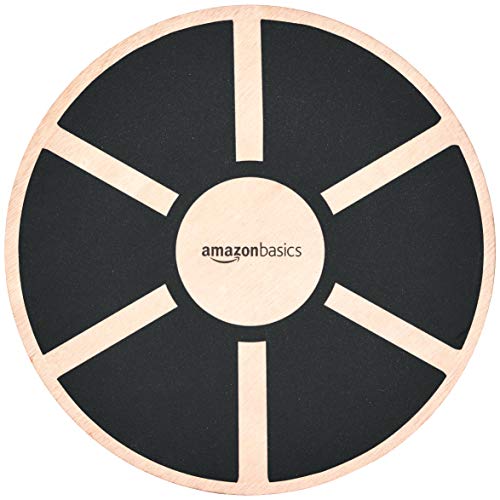
The Amazon Basics balance trainer features a solid wood top and a stable base designed to help users build core strength, balance, and posture. It supports a broad range of exercises, including push-ups, planks, and standing balance poses. The non-slip surface provides reliable grip during movements, while the wood construction is built to handle everyday use for beginners who want a dependable starter board. Ideal for home workouts and desk setups that benefit from improved balance during daily tasks.
Yes4All Balance Board, Surf Board Trainer

This board offers easy customization with two removable stoppers and multiple height options (11, 16, or 22 inches). It’s built from 15-ply pressed wood and supports up to 300 pounds, with emery-like finishing to reduce slipping. The design encourages coordination and agility while engaging core muscles and leg strength. Suitable for beginners who want a gradual increase in challenge as skills improve, and for users who prefer a sturdy, adjustable balance trainer.
StrongTek Professional Wooden Balance Board

StrongTek combines a crossed hardwood base with a 360° rotation, delivering a more challenging workout than flat boards. It supports advanced movements such as push-ups, squats, lunges, planks, and mountain climbers, making it suitable as a next-step option for beginners who want to progress. The 17.5×13.5 inch surface accommodates shoulder-width stances, with a non-slip base to keep stability during sessions. It’s a durable choice designed to last and evolve with user progress.
Sportneer Balance Board — 7 Modes

This multifunction balance trainer offers seven challenge modes and four independent magnetic stoppers for easy height adjustment. It includes a balance board, roller, and a solid rubber ball, making it versatile for a range of workouts. Built from birch and rated to handle up to 450 pounds, this board supports both beginners and more active users seeking a higher level of balance work. The design helps improve coordination, core strength, and overall stability while being beginner-friendly.
GIBBON SlackBoard

The GIBBON SlackBoard is a compact, lightweight balance trainer designed for all ages, emphasizing safety with a low-profile setup. It promotes core strength, flexibility, and posture while offering a modern aesthetic suitable for home or office use. Its design minimizes risk for beginners and supports a wide range of users—from kids to adults—during daily balance routines and lightweight workouts. The equipment focuses on safe, controlled movements to develop body awareness and stability.
Buying Guide: Key Purchase Considerations
When choosing a balance board for beginners, consider board type, surface, and stability. A wider board with a textured grip reduces slipping risk, while a sturdy base and slip-resistant materials increase safety during early sessions. Adjustable height or stoppers can tailor difficulty as you improve, and weight capacity matters for future-proofing. Material choice, such as wood for durability or composite boards for lighter weight, affects feel and maintenance. If you plan to use it with a standing desk or multi-exercise routines, look for a board that offers versatility without compromising safety.
Versatility versus specialization is another consideration. Some boards emphasize core strengthening with rotational movement, while others focus on balance with minimal tilt. If you’re training for activities like surfing, snowboarding, or stand-up paddleboarding, selecting a board with more challenging angles or optional rolling accessories can help closely mimic real-world skills. Finally, user age and fitness level are crucial; beginner users should start with lower difficulty and progressively increase the challenge to prevent injury.
Safety tips for beginners include starting with short sessions, maintaining proper stance, and using a non-slip surface. Wear supportive athletic footwear if the board allows, and ensure you have clear surrounding space. Regularly check for wear on the top surface and base, especially after new exercises or higher-intensity routines. For those recovering from injuries or with balance concerns, consult a professional before starting a balance-board program.