Backcountry skiing demands gear that balances capacity, protection, and comfort. A reliable backpack supports long climbs, quick descents, and safe handling of avalanche gear, hydration, and layers. This guide highlights five top choices that combine rugged construction with thoughtful organization. Each option prioritizes backcountry readiness, from Recco reflectors to removable back protectors and hydration compatibility. Whether you’re skinning through fresh powder or cruising alpine routes, these packs are engineered to stay secure, dry, and comfortable across varying alpine conditions.
Summary table of selected products:
| Product | Brand | Capacity | Key Feature |
|---|---|---|---|
| Unigear Ski Hydration Backpack | Unigear | 30L | Hydration compatibility, multiple compartments |
| TerraWest Core Avalanche Kit Ski Backpack | TerraWest | 22L | Recco Reflector, removable back protector, shovel & probe |
| TerraWest Core 22 Ski Backpack | TerraWest | 22L | Recco Reflector, concealed back protector |
| Osprey Kamber 30L | Osprey | 30L | J-zip access, insulated hydration sleeve |
| Bear Grylls 45L Hydration Backpack | Bear Grylls | 45L | 2L hydration bladder included, rugged shell |
Unigear 30L Ski Hydration Backpack
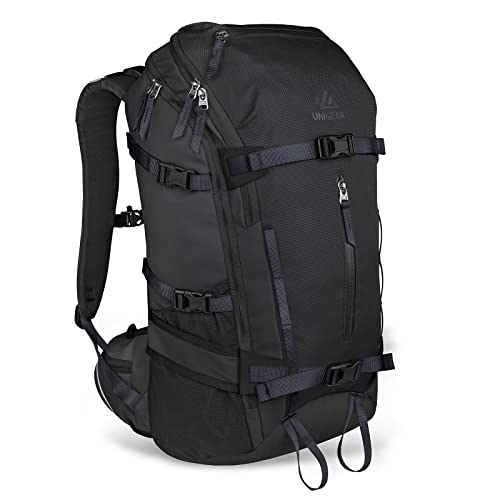
The Unigear 30L Ski Hydration Backpack is designed for long backcountry days, with a roomy 30-liter capacity and organized compartments that accommodate ski gear, clothing, a phone, and a laptop up to 15 inches. The main shell uses 900D polyester with PU-coated side panels and a 500D PVC bottom to resist abrasion and moisture. A dedicated, hydration-compatible interior pocket fits a 3-liter bladder, keeping fluids accessible during climbs. An insulated, velvet-lined pocket protects ski goggles from scratches, while an S-shaped shoulder belt and an inverted Y back panel promote airflow and reduce back moisture.
Comfort is enhanced by a waist belt and an adjustable sternum strap, both aimed at stabilizing heavier loads. Reflective strips improve nighttime visibility, and a whistle on the chest strap adds an extra safety feature. The bag’s design emphasizes practical ergonomics: pockets are sized for quick gear access, and the pack sits close to the body to minimize bounce on steep skin tracks. This model is a versatile choice for snow sports, including skiing, hiking, and mountaineering, thanks to its durable fabric, secure closures, and thoughtful storage layout.
TerraWest Core Avalanche Kit Ski Backpack

The TerraWest Core Avalanche Kit combines essential safety gear with a compact 22-liter pack. It includes a Recco Reflector, a removable SAS-TEC back protector, a 2-liter hydration bladder, an avalanche aluminum shovel, and a 240-cm probe—all neatly concealed within a drawstring woven carry bag. The Recco Reflector helps professional rescue teams locate buried individuals, improving locate times in avalanche scenarios. The back protector adds critical impact absorption during activity, while the hydration system maintains fluids without interrupting movement on the mountain routes. This kit is purpose-built for backcountry skiing and snowboarding in variable winter terrain.
Design-wise, the system prioritizes ease of use and rapid deployment of safety gear. The reflective Recco helps responders, and the SAS-TEC back protection can be removed when not needed for lighter tours. For operators focused on safety-first ascents, this TerraWest setup provides a streamlined, all-in-one solution for uphill travel and downhill protection, without requiring multiple separate pieces of equipment.
TerraWest Core 22 Ski Backpack

The TerraWest Core 22 Ski Backpack is a lightweight 22-liter option with built-in safety features that suit serious backcountry enthusiasts. It includes a Recco Reflector and a removable SAS-TEC back protector, both concealed within a drawstring woven carry bag for a clean exterior. The Recco Reflector enables professional rescue teams to pinpoint your location in avalanche situations, offering peace of mind during high-angle ascents and remote descents. The back protector adds protective padding across the spine, while the compact frame helps preserve mobility on steeper skins. This pack balances safety with a streamlined silhouette for fast, confident ascents.
Users appreciate the versatility of the Core 22 for day tours, splitboarding, and short backcountry trips. The combination of Recco, protection, and a slim design means you can pack essential tools without overburdening yourself. The pack’s organization supports a range of climbing and skiing activities, and its durability suits harsh winter environments.
Osprey Kamber 30L Backcountry Ski Backpack

The Osprey Kamber 30L is a feature-rich backcountry pack designed for ski and snowboard trips. Its large front panel provides J-zip access to an avalanche safety kit—shovel handle and probe sleeves keep essential tools within reach. The backpanel access opens to the main compartment, with an insulated hydration sleeve to prevent freezing. The pack also includes easy-access pockets for small items and a dedicated stash pocket for wet or insulated gear. Internal side panel sleeves help organize thermoses and smaller essentials, while a robust harness and ergonomic back support ensure comfort during long ascents and endurance descents.
Osprey emphasizes durability and user-friendly design, making Kamber suitable for multi-day incursions as well as quick day trips. The combination of accessible safety kit storage, hydration protection, and organized compartments appeals to skiers and snowboarders who prioritize efficiency, safety, and comfort on variable snow and terrain.
Bear Grylls 45L Hydration Backpack

The Bear Grylls 45L Hiking Hydration Backpack offers a larger-capacity option for longer backcountry days. It includes a 2-liter hydration bladder with a kink-free sip tube and a cushioned bite valve, helping maintain hydration without interrupting movement. Built with a durable Oxford shell, the bag is designed for rugged use and snow exposure. Storm-proof zippers and a weather-resistant exterior help protect gear in inclement conditions. With 45 liters of storage, it accommodates extra layers, safety gear, and meal supplies for extended trips, while remaining adaptable for skiing, snowshoeing, or winter camping. The pack’s versatility makes it a dependable choice for mixed winter activities.
Buying Guide
Choosing the right backcountry ski backpack involves weighing safety, capacity, comfort, and durability. Key considerations below help compare models across the five highlighted options and others you may encounter:
- Capacity vs. duration: For day trips, 20–30L is typically sufficient if you minimize extra gear. For longer expeditions or cold storms, 30–45L offers more space for extra layers, food, and safety equipment.
- Safety integrations: Recco reflectors enable professional search teams to locate buried hikers, increasing safety in avalanche terrain. Removable back protectors add impact protection on steep slopes. Consider whether these features meet your local safety standards and personal risk tolerance.
- Hydration compatibility: A compatible hydration bladder (commonly 2–3L) reduces the need to remove packs for water. Insulated sleeves help prevent freezing on cold climbs.
- Organization and access: Front panel, top, or backpanel access impacts how quickly you can grab probes, shovels, or snacks. Separate pockets for goggles, avalanche gear, and electronics keep items secure and accessible.
- Durability and weather resistance: Fabrics such as high-denier nylons and PU coatings resist abrasion from crampons, ice, and sharp gear. Water resistance and bottom reinforcement matter on wet or snowy approaches and descents.
- Fit and comfort: Adjustable sternum straps, waist belts, and padded shoulder straps reduce fatigue on long ascents. Look for breathable back panels and load distribution to minimize heat buildup and sweating on climbs.
- Weight vs. protection trade-offs: Heavier packs with more safety gear may increase fatigue. Balance weight against necessary safety features and your trip length.
- Airport and travel considerations: If you plan to fly with gear, verify airline restrictions and pack sizes to ensure you can move efficiently between trailheads and airports.
- Terrain and climate compatibility: In colder climates with deeper snow, larger packs help with extra layers. In milder conditions, a lighter setup can reduce drag on the ascent.
All five highlighted options present credible blends of safety, hydration, and organization for backcountry skiing. Your choice should align with your typical trip length, risk tolerance, and the kind of terrain you expect to encounter. Testing fit with your own clothing system and seasonal layers can help ensure you’re comfortable during both long climbs and rapid descents. Remember that a well-chosen backpack is a critical component of your overall backcountry strategy, contributing to safety, efficiency, and enjoyment on the mountain.