Choosing the right air-assisted or cushioned treadmill can support rehab by offering smooth joint protection, adjustable incline, and controlled speeds. This guide highlights five treadmills with cushioning, incline options, and reliable performance to assist in rehabilitation programs. Each model is evaluated for low-impact walking, safety features, and durability in home or clinical settings. The selections emphasize gentle impact, intuitive controls, and steadiness to help users build mobility safely.
A quick overview of the featured products:
| Product | Brand | Key Benefit | Incline / Cushioning |
|---|---|---|---|
| Hccsport Walking Treadmill | Hccsport | Intelligent air cushioning with 18 incline levels | 0–16% incline, air cushioning |
| ApexNexus Treadmill with Incline | ApexNexus | 3-in-1 compact with incline, quiet motor | 8% incline (manual) |
| Body-Solid Endurance T50 | Body-Solid | Low-impact rehab-focused design with wide belt | Slow start, up to 5 mph |
| AoraPulse Portable Foldable Treadmill | AoraPulse | Lightweight folding model with LED display | Up to 6.2 mph, quiet motor |
| RUNOW Curved Treadmill | RUNOW | Nonslip belt and high weight capacity | Manual, non-motorized, resistance levels |
Hccsport Walking Treadmill With Auto Incline And Air Cushioning

The Hccsport treadmill features a dual-motor design delivering speeds up to 10 mph and 18 levels of auto incline from 0% to 16%. Its Intelligent Air Cushioning System dynamically adjusts air pressure beneath the running surface to maximize shock absorption, potentially reducing joint impact during rehab sessions. The machine’s foldable frame and wide belt provide a stable platform for longer, low-impact walks. Suitable for home or office use, it enables controlled incline variation to mimic gentle hill training while protecting joints.
ApexNexus Treadmill With Incline 3-in-1 Portable
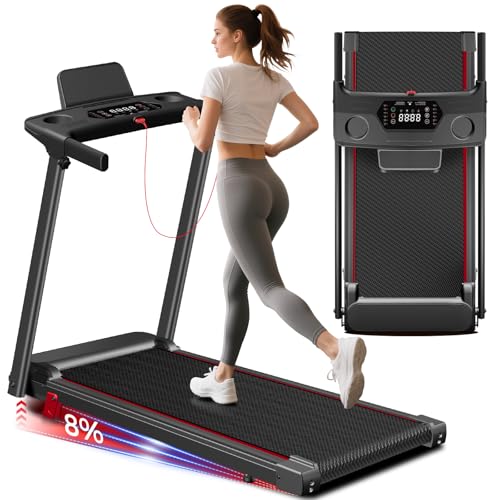
This 3-in-1 portable treadmill emphasizes accessibility and quiet operation. It offers an 8% manual incline to simulate moderate hill climbs, boosting calorie burn and engagement without heavy mechanical noise. The LED display with a memory feature tracks time, speed, calories, and distance, helping rehab participants monitor progress. Its 3.0 HP brushless motor supports speeds from 0.6 to 6.2 mph and a maximum user weight around 300 pounds, making it suitable for different rehab stages and users seeking stable performance with minimal disruption.
Body-Solid Endurance (T50) Rehab Walking Treadmill
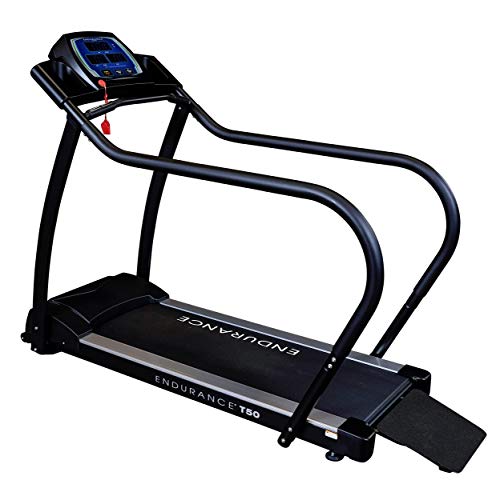
The Body-Solid Endurance T50 is designed with rehab in mind, featuring a wide belt and a slow starting speed (0.1 mph) that can be increased up to 5 mph. It supports injury rehab and low-impact walking with a 1.5 HP motor. The unit is built for stability and safety, including a rear ramp entry and padded handrails for easier access. A lifetime frame warranty underlines durability for clinics or home gyms focusing on rehabilitation timelines and consistent usage. The treadmill emphasizes reliability and accessibility over complex programming.
AoraPulse Portable Foldable Treadmill For Home And Office

The AoraPulse folding treadmill combines portability with robust performance. Its 3.0 HP brushless motor supports speeds up to 6.2 mph with a weight capacity of 300 pounds, and it operates quietly to minimize disruption in home or office environments. The LED display provides clear readouts of time, speed, distance, and calories, while foldable mechanics and wheels enable easy storage and relocation—beneficial for rehab routines that require workspace flexibility and space management.
AoraPulse 3.0 HP Foldable Portable Treadmill

This model mirrors the prior AoraPulse unit with a 3.0 HP brushless motor, a 300-pound capacity, and up to 6.2 mph. The foldable design with a multi-function LED display makes it suitable for rehab programs conducted at home or in small spaces. The belt and motor configuration aim to balance performance with quiet operation, helping patients maintain a consistent rehab routine without significant space or noise constraints.
RUNOW Curved Treadmill With Resistance Levels

The RUNOW curved treadmill emphasizes non-motorized, self-generated movement with four resistance levels and a large, non-slip belt. Its 450-pound capacity supports a broad range of users, including heavier rehab patients. The LCD display keeps track of time, speed, distance, and calories. As a curved treadmill, it promotes a natural gait and low-impact cardio, which can be advantageous in rehabilitation settings where joint comfort and balance control are priorities. This model focuses on durability and versatility in both home and commercial rehab contexts.
Buying Guide: Key Purchase Considerations
- Injury rehab suitability: Look for low starting speeds, wide belts, and rear-entry designs for easier access and safer transfers. A low-impact cushioning system can protect knees and hips during progressive walking programs.
- Incline and incline control: Choose models with adjustable incline to simulate varied terrains gradually. Manual vs. automatic incline affects user control and maintenance needs; manual incline is simple and reliable, while auto incline offers dynamic training options.
- Motor type and noise: For home or clinic settings, a quiet motor reduces disruption for others nearby. Brushless motors tend to run smoother and with less maintenance over time.
- Weight capacity and dimensions: Ensure the treadmill supports the user’s weight and fits the available space. Foldable designs help with storage in small rooms or therapy spaces.
- Safety features: Emergency stop cords, stable handrails, and easy-access entry help prevent accidents during rehab sessions. A wide belt reduces missteps and increases confidence during walks.
- Display and tracking: A clear LED or LCD display that tracks time, distance, speed, and calories supports progress monitoring and adherence to rehab plans.
- Durability and warranty: Consider long-term warranties on frames and motors, especially for daily rehab use in home or clinic settings.
- Portability and setup: Foldable models with wheels are advantageous for moving between rooms or reconfiguring therapy spaces as needed.
When selecting an air-cushioned or incline-capable treadmill for rehab, prioritize consistent cushioning, gentle acceleration, and straightforward controls. The right model should balance comfort, safety, and measurable progress to align with rehabilitation goals. Consulting with a physical therapist can help tailor the selection to individual mobility targets and recovery timelines.